
What Is PCOS? A Clear Guide to Symptoms, Causes, and Diagnosis
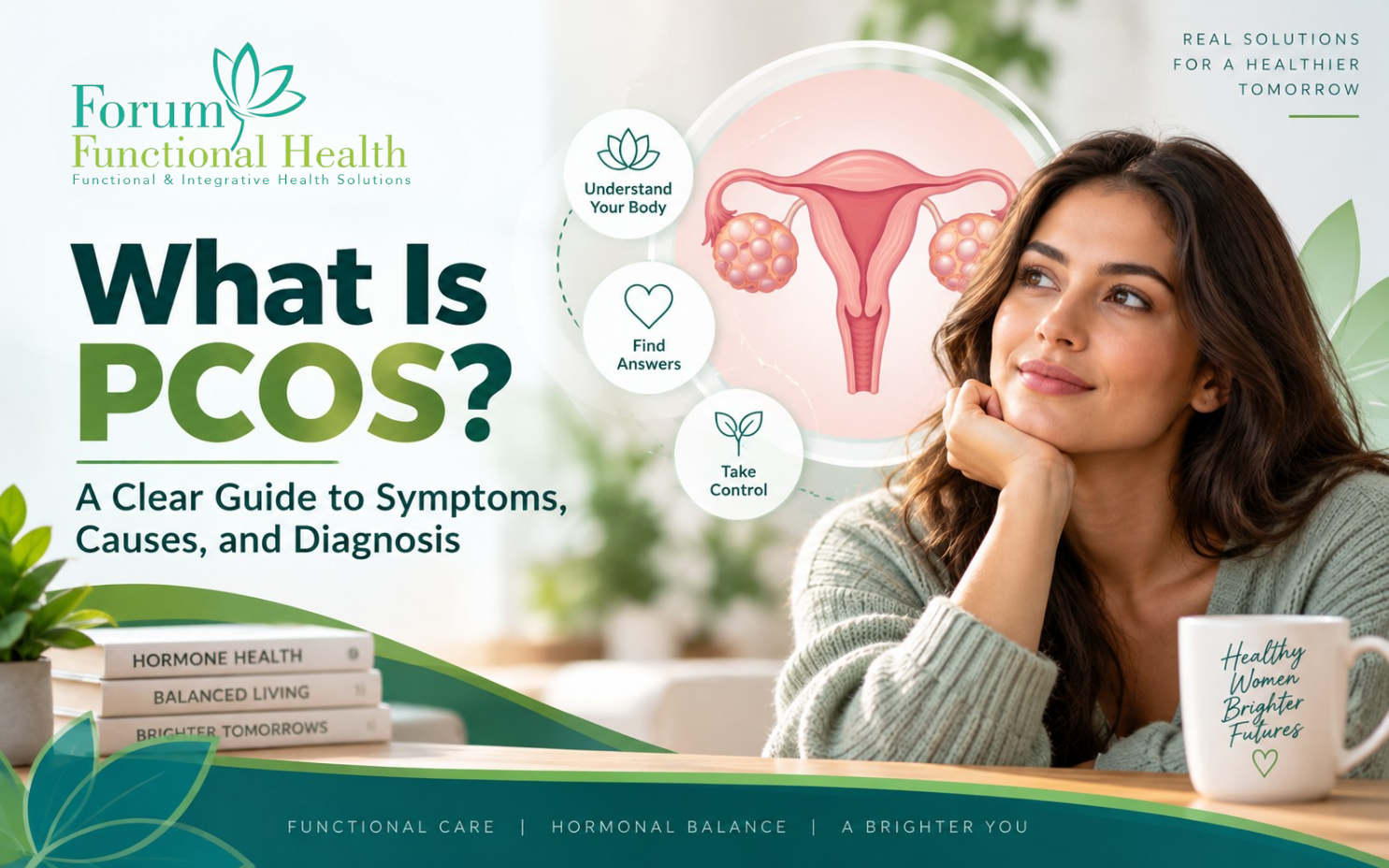
If you have irregular periods, acne, unwanted facial or body hair, difficulty becoming pregnant, or concerns about hormones or metabolic health, you may have come across the term PCOS. But what is PCOS, exactly?
PCOS stands for polycystic ovary syndrome, a complex condition involving reproductive, hormonal, and metabolic features. It can affect ovulation, menstrual cycles, androgen activity, fertility, and metabolic health. Importantly, PCOS does not look the same in every person, and having one symptom does not mean you have the condition.
Understanding the PCOS meaning, its possible causes, signs, and diagnostic process can help you have a more informed conversation with a healthcare professional. Diagnosis requires appropriate clinical evaluation because several other conditions can cause similar symptoms.
What Is PCOS in Simple Terms?
PCOS is a hormonal and endocrine condition that can affect ovulation, menstrual cycles, and androgen levels. Its features vary from person to person, and not everyone with PCOS has ovarian cysts. Diagnosis involves evaluating the overall clinical picture rather than relying on one symptom or test.
What Does PCOS Stand For?
PCOS = Polycystic Ovary Syndrome.
The PCOS full form describes a condition associated with several reproductive and metabolic features. The name can be confusing because “polycystic” does not mean that every person with PCOS has ovarian cysts.
The ovaries normally contain follicles, which are small fluid-filled structures involved in egg development. Some people with PCOS have an increased number of follicles or a particular ovarian appearance on ultrasound. These follicles are not necessarily true pathological cysts.
In fact, an adult can meet diagnostic criteria for PCOS without having polycystic ovarian morphology on an ultrasound.
That is why the diagnosis is based on a broader combination of findings involving ovulation, androgen activity, and ovarian morphology, after other possible explanations have been considered.
What Is PCOS and How Is It Diagnosed?
There is no single blood test, symptom, or ultrasound finding that automatically confirms PCOS.
For adults, commonly used diagnostic frameworks are based on the Rotterdam criteria. In general, clinicians look for two of three key features, while also excluding other conditions that could explain the symptoms.
1. Medical history
Your healthcare professional may ask about:
- How often your menstrual periods occur
- Whether your cycles have changed over time
- Symptoms such as excess facial or body hair
- Acne or scalp hair thinning
- Fertility concerns
- Previous pregnancies or attempts to conceive
- Family history of PCOS, diabetes, or related conditions
- Medications and hormonal contraceptives
- Relevant metabolic or cardiovascular factors
Your menstrual history can be particularly useful because irregular cycles may provide clues about ovulatory dysfunction.
2. Physical examination
A physical examination may help identify clinical signs associated with androgen excess or metabolic concerns.
Depending on the individual, a clinician may assess:
- Excess facial or body hair, known as hirsutism
- Acne
- Scalp hair thinning
- Blood pressure
- Weight and other measures of metabolic health
- Skin changes such as acanthosis nigricans
These findings do not diagnose PCOS on their own. They are interpreted alongside your medical history and other clinical information.
3. Laboratory testing
Laboratory testing may be used to assess hormone levels and investigate other possible causes of symptoms.
For example, clinicians may evaluate androgen levels when biochemical hyperandrogenism needs to be assessed. Additional testing may be considered when symptoms suggest another endocrine or reproductive condition.
The exact tests are not identical for every person. A healthcare professional determines which testing is appropriate based on age, symptoms, medications, menstrual pattern, medical history, and examination findings.
4. Ultrasound
Ultrasound can help evaluate polycystic ovarian morphology, which refers to a particular pattern involving ovarian follicles and/or ovarian size.
However, ultrasound is not automatically necessary for every adult with suspected PCOS. When irregular menstrual cycles and hyperandrogenism are already established, current international guidance indicates that ovarian ultrasound may not be needed to establish the diagnosis.
This is another reason why the idea that “PCOS means cysts on the ovaries” is inaccurate.
5. Rotterdam criteria
A simplified overview of the commonly used adult diagnostic framework is:
| Diagnostic Feature | What It Means |
|---|---|
| Ovulatory dysfunction | Irregular or absent ovulation, often reflected by irregular menstrual cycles |
| Hyperandrogenism | Clinical signs and/or laboratory evidence of increased androgen activity |
| Polycystic ovarian morphology | Specific ovarian findings identified through appropriate imaging |
In adults, clinicians generally diagnose PCOS when two of these three features are present after they appropriately exclude other conditions.
This framework does not provide a self-diagnosis formula. A healthcare professional must evaluate the complete clinical picture and rule out other conditions that can cause similar symptoms.
For adolescents, clinicians use different diagnostic considerations. They should not apply adult criteria without considering the patient’s age and the normal changes that occur during puberty.
What Causes PCOS?
If you are wondering what is PCOS caused by, the most accurate answer is that the exact cause is not fully understood.
Research suggests that PCOS develops through a combination of genetic, hormonal, metabolic, and environmental influences rather than one single cause.
Genetics and family history
PCOS can run in families. Having close relatives with PCOS or related metabolic conditions may increase the likelihood of developing features associated with the condition.
However, family history does not determine whether someone will develop PCOS.
Insulin resistance
Insulin helps the body regulate blood glucose and use energy. Some people with PCOS have insulin resistance, meaning the body’s cells respond less effectively to insulin.
The body may compensate by producing more insulin. Higher insulin levels can interact with ovarian androgen production and may contribute to ovulatory dysfunction in susceptible individuals.
Insulin resistance is important in PCOS, but it is not present in every person with the condition.
Androgens
Androgens are hormones that are present in everyone, although levels and physiological roles differ.
In PCOS, increased androgen activity may contribute to:
- Excess facial or body hair
- Acne
- Scalp hair thinning
- Ovulatory dysfunction
Androgen-related symptoms can vary substantially between individuals.
Metabolic factors
PCOS is also associated with metabolic health. Depending on the individual, this may include insulin resistance, changes in blood glucose regulation, abnormal cholesterol levels, blood pressure concerns, or other cardiometabolic risk factors.
These associations are one reason comprehensive PCOS care may involve more than menstrual or fertility concerns.
Inflammation
Research has also explored relationships between PCOS and low-grade inflammation. However, inflammation should not be presented as the single cause of PCOS.
The condition is complex, and researchers continue to study how genetic, metabolic, endocrine, and environmental factors interact.
What Are the Signs of PCOS?
The signs of PCOS can vary considerably. Some people have several recognizable symptoms, while others may have relatively few obvious signs.
Common features can include:
- Irregular menstrual periods
- Infrequent periods
- Absent periods
- Evidence of ovulatory dysfunction
- Excess facial or body hair
- Acne
- Scalp hair thinning
- Difficulty becoming pregnant
- Insulin resistance or other metabolic changes
- Weight changes in some individuals
Not everyone experiences all of these features.
For example, a person can have PCOS while maintaining a weight that falls within a healthy range. Likewise, having acne or irregular periods does not automatically mean PCOS is present.
Symptoms also may change over time, which can make the condition difficult to recognize without professional evaluation.
PCOS in Women Explained: What Can It Affect?
PCOS can affect more than the ovaries. It is a condition with reproductive, endocrine, and metabolic dimensions.
| Area of Health | Possible Relationship With PCOS |
|---|---|
| Menstrual health | Irregular or infrequent menstrual cycles may occur because ovulation is inconsistent |
| Ovulation | Ovulatory dysfunction is one of the core features used in adult diagnosis |
| Fertility | Irregular ovulation can make conception more difficult for some people |
| Skin and hair | Androgen activity may contribute to acne, hirsutism, or scalp hair thinning |
| Metabolic health | Insulin resistance and other cardiometabolic risk factors may occur |
| Long-term health | Monitoring may be appropriate for glucose, blood pressure, cholesterol, and endometrial health depending on individual risk |
Menstrual health
Irregular periods may occur when ovulation is infrequent or absent. Some people have very long cycles, while others may skip periods altogether.
Ovulation
Ovulatory dysfunction is one of the central features of PCOS. It can affect menstrual regularity and may also have implications for fertility.
Fertility
PCOS is a common cause of ovulatory infertility. However, having PCOS does not mean pregnancy is impossible. Many people with PCOS do become pregnant, with appropriate fertility evaluation and treatment when needed.
Skin and hair
Higher androgen activity can contribute to hirsutism, acne, and scalp hair thinning.
Metabolic health
PCOS may be associated with insulin resistance, glucose abnormalities, high blood pressure, abnormal cholesterol, and other metabolic risk factors.
These associations do not mean that every person with PCOS will develop metabolic disease.
What Happens If PCOS Is Left Untreated?
The phrase “untreated PCOS” can sound alarming, but PCOS is not identical in every person. The potential consequences depend on the individual’s reproductive, hormonal, and metabolic profile.
When important features are not addressed, some people may have ongoing:
- Irregular or absent ovulation
- Difficulty becoming pregnant
- Insulin resistance
- Increased risk of type 2 diabetes
- High blood pressure
- Abnormal cholesterol levels
- Cardiovascular risk factors
- Endometrial hyperplasia
Long periods without regular ovulation can expose the uterine lining to prolonged hormonal stimulation. In some circumstances, this can increase the risk of endometrial hyperplasia and, over time, endometrial cancer.
Importantly, an increased risk does not mean that an individual will develop one of these conditions.
Appropriate monitoring can help identify relevant concerns early and guide individualized management.
How Is PCOS Managed?
There is no single management plan that works for everyone with PCOS.
Care depends on your symptoms, reproductive goals, metabolic health, age, medical history, and personal preferences.
Possible areas of management include:
Nutrition
A balanced eating pattern can support overall metabolic health. There is no single “PCOS diet” that every person must follow.
Nutrition goals should be individualized rather than based on restrictive rules or claims that one food group causes PCOS.
Physical activity
Regular physical activity can support cardiovascular and metabolic health and may be part of a broader PCOS management plan.
The appropriate type and intensity of exercise depend on the person’s preferences, fitness level, health status, and goals.
Sleep and stress management
Adequate sleep and sustainable stress-management strategies can support overall health and quality of life.
They should be viewed as components of comprehensive care rather than cures for PCOS.
Menstrual-cycle management
Healthcare professionals may recommend different approaches to manage irregular cycles, depending on the individual’s goals and circumstances.
Metabolic health
If insulin resistance, elevated blood glucose, cholesterol abnormalities, or blood-pressure concerns are present, these issues may need targeted evaluation and management.
Fertility-focused care
For someone trying to conceive, treatment may focus on identifying whether ovulatory dysfunction is contributing to fertility challenges and determining which evidence-based options are appropriate.
Medications
Medications may be considered for specific PCOS-related concerns, including menstrual irregularity, androgen-related symptoms, metabolic issues, or fertility.
The appropriate medication depends on the person’s clinical situation.
Our Approach to PCOS Care
At Forum Functional Health Center, PCOS care can be approached from an individualized, whole-person perspective.
The goal is to understand the person’s symptoms, health history, metabolic factors, reproductive concerns, nutrition, lifestyle, and overall goals rather than assuming that every person with PCOS needs the same plan.
A functional or whole-person approach can complement appropriate conventional evaluation and treatment. It should not replace medically appropriate diagnosis, medication, specialist care, or fertility treatment when those services are indicated.
Learn more about Polycystic Ovary Syndrome (PCOS) treatment and explore Functional Medicine or Functional Health Services to understand the broader approach to individualized care.
For patients seeking care in McKinney, Texas, this type of personalized evaluation can be particularly useful when symptoms involve multiple areas of health rather than one isolated concern.
Can Supplements Support PCOS Management?
Supplements may be discussed as one part of an individualized nutrition or wellness plan, but they are not cures for PCOS and should not replace appropriate medical care.
The evidence for supplements varies, and products can differ in formulation, quality, dose, and suitability for an individual.
InosiCare
InosiCare contains:
- Myo-inositol
- D-chiro-inositol
- A 40:1 ratio of myo-inositol to D-chiro-inositol
- Resistant starch
- Trace minerals
Inositol has been studied in PCOS, particularly in relation to metabolic and reproductive outcomes. However, evidence remains limited for some clinical outcomes, and current guidelines do not establish one specific inositol formulation or dose as appropriate for everyone.
For patients interested in this ingredient, inositol dietary supplement can be discussed as part of an individualized plan.
Alpha Lipoic Acid
Alpha lipoic acid is a compound with antioxidant properties that has also been studied in relation to metabolic health.
Research into alpha lipoic acid and PCOS continues, and it should not be represented as a treatment that cures or reverses PCOS.
For information about the product offered by the clinic, see the alpha lipoic acid supplement.
Methyl B Complex
Methyl B Complex provides B vitamins along with choline, inositol, and folate.
These nutrients have roles in normal physiological processes and nutritional health. A B-vitamin supplement should be viewed as nutritional support rather than a direct treatment for PCOS.
Learn more about the methylated B complex supplement.
For additional product information, the clinic also provides polycystic ovary syndrome supplements.
Ingredient Insights
Myo-inositol and D-chiro-inositol: These naturally occurring compounds support cellular signaling, and researchers continue to study their potential role in PCOS.
Resistant starch: This type of carbohydrate resists digestion in the small intestine, allowing gut microorganisms to ferment it.
Alpha lipoic acid: This compound has antioxidant properties, and researchers have studied its potential role in metabolic health.
B vitamins, choline, and folate: Nutrients involved in a range of normal metabolic and cellular processes.
Supplements should be reviewed with a qualified healthcare professional, particularly if you take medications, are pregnant or trying to conceive, or have other medical conditions.
Flavor information was not provided for these products.
Hypothetical Examples: What PCOS Can Look Like
Irregular periods
A hypothetical adult has menstrual cycles that occur unpredictably and also notices increased facial hair. These features may warrant evaluation for ovulatory dysfunction and androgen excess.
The person should not assume they have PCOS based solely on these symptoms. A healthcare professional would consider the medical history, examination, appropriate laboratory evaluation, and other possible explanations.
PCOS and metabolic health
A hypothetical patient already has a PCOS diagnosis and is also found to have concerns related to blood glucose and insulin resistance.
In this situation, PCOS care may include attention to nutrition, physical activity, metabolic monitoring, and clinically appropriate treatment. The goal is not simply to focus on body weight but to address the person’s overall metabolic health.
PCOS and fertility
A hypothetical patient has been trying to conceive and has very irregular menstrual cycles.
Because irregular cycles can indicate inconsistent ovulation, a healthcare professional may evaluate whether ovulatory dysfunction is contributing to difficulty conceiving. Fertility care can then be individualized according to the person’s circumstances and goals.
These examples are hypothetical and are not descriptions of actual Forum Functional Health Center patients.
Why PCOS Information Should Be Evaluated Carefully
Searching online can help you understand medical terminology, but it cannot determine whether you have PCOS.
PCOS can look different from one person to another. Similar symptoms can also occur with thyroid disorders, elevated prolactin, nonclassic congenital adrenal hyperplasia, certain medications, and other endocrine or reproductive conditions.
That is why a professional evaluation matters.
A responsible approach should consider:
- Menstrual history
- Ovulation
- Clinical signs of androgen excess
- Relevant hormone levels
- Metabolic health
- Medical history
- Family history
- Medications
- Other possible diagnoses
Supplements should also be reviewed for appropriateness, potential interactions, dose, quality, and individual circumstances.
FAQs About PCOS
What is PCOS?
PCOS stands for polycystic ovary syndrome. It is a complex endocrine condition associated with features such as ovulatory dysfunction, androgen excess, and polycystic ovarian morphology in some individuals. Not everyone with PCOS has ovarian cysts, and symptoms can vary considerably.
What does PCOS stand for?
PCOS stands for polycystic ovary syndrome. The name refers to one possible ovarian feature of the condition, but ovarian cysts are not required for a PCOS diagnosis. Clinicians evaluate a broader combination of reproductive and hormonal features when diagnosing the condition.
What causes PCOS?
The exact cause of PCOS is not fully understood. Research suggests that genetic and environmental influences interact with hormonal and metabolic factors. Insulin resistance and increased androgen activity can contribute to PCOS features in some people, but neither explains every case.
What are the signs of PCOS?
Common signs may include irregular or infrequent periods, ovulatory dysfunction, excess facial or body hair, acne, scalp hair thinning, difficulty becoming pregnant, and metabolic changes. Not everyone experiences the same symptoms, and having one or more of these signs does not automatically mean a person has PCOS.
How is PCOS diagnosed?
For adults, commonly used diagnostic criteria generally consider two of three features: ovulatory dysfunction, clinical or biochemical hyperandrogenism, and polycystic ovarian morphology. Other possible causes of similar symptoms should be appropriately excluded. Diagnosis should be made by a qualified healthcare professional rather than through an online checklist.
Can you have PCOS without ovarian cysts?
Yes. Ovarian cysts are not required for a PCOS diagnosis. Some people meet diagnostic criteria because they have ovulatory dysfunction and hyperandrogenism without polycystic ovarian morphology. The term “polycystic” can therefore be misleading when interpreted literally.
Does PCOS affect fertility?
PCOS can affect fertility because ovulatory dysfunction may make it harder to predict or achieve ovulation. However, PCOS does not mean pregnancy is impossible. Many people with PCOS become pregnant, and fertility treatment can be considered when appropriate.
Can lifestyle changes help manage PCOS?
Yes. Nutrition, physical activity, adequate sleep, and sustainable health habits can be important components of PCOS management. The appropriate approach varies by individual. Lifestyle changes should support overall health rather than be presented as a cure for PCOS.
Can supplements cure PCOS?
No supplement has been established as a cure for PCOS. Some nutrients and compounds, including inositol, have been researched for potential roles in PCOS management, but evidence and outcomes vary. Supplements should complement—not replace—appropriate medical evaluation and treatment.
Conclusion: Understanding What Is PCOS
So, what is PCOS? It is a complex endocrine condition that can affect ovulation, menstrual cycles, androgen activity, fertility, and metabolic health.
The PCOS meaning goes beyond ovarian appearance. Not everyone with PCOS has ovarian cysts, and diagnosis requires consideration of the overall clinical picture rather than one symptom or laboratory result.
If you are experiencing irregular periods, signs of androgen excess, fertility concerns, or metabolic-health concerns, professional evaluation can help determine what may be contributing to your symptoms.
PCOS management is individualized. The right approach may include lifestyle strategies, monitoring, medications, fertility-focused care, nutritional support, and other clinically appropriate options.
If you are looking for individualized support in McKinney, Texas, you can explore Personalized Care Health Center to learn more about available care.
Special Consultation Offer
$300 (Reg. $500)
New Patients
Contact Forum Functional Health