
PCOS Symptoms in Women: Early Signs, Causes, and When to See a Specialist
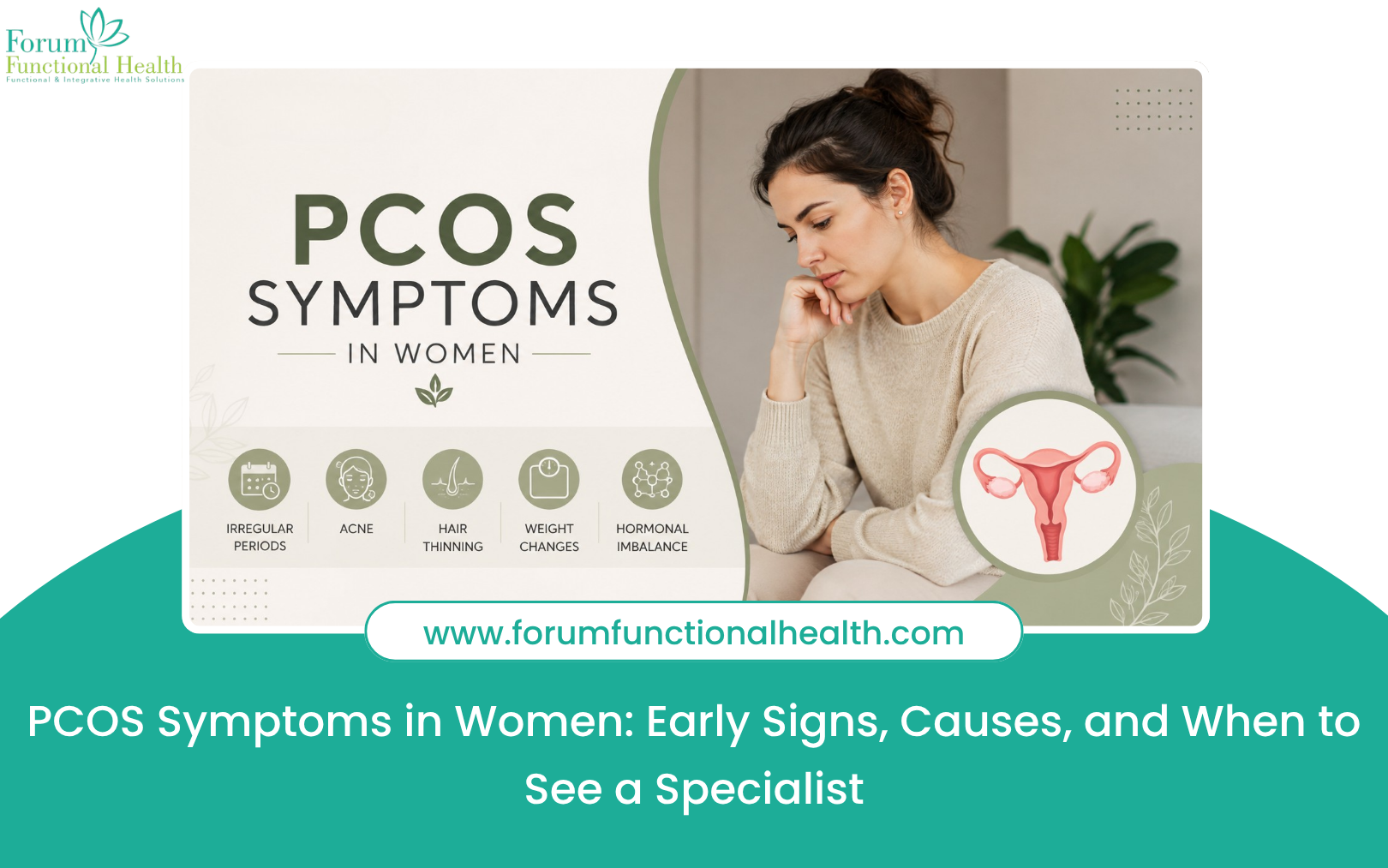
PCOS symptoms in women can look different from person to person. One woman may notice irregular or missed periods, while another may first seek help for acne, unwanted facial hair, scalp hair thinning, or difficulty becoming pregnant. Some people also have metabolic features such as insulin resistance without obvious reproductive symptoms. Because no single symptom proves that someone has polycystic ovary syndrome, recognizing patterns and getting an appropriate evaluation can be important.
Polycystic ovary syndrome (PCOS) is a common hormonal and metabolic condition that can affect ovulation, menstrual cycles, androgen activity, fertility, and long-term metabolic health. If several symptoms are occurring together, a qualified healthcare professional can help determine whether PCOS—or another condition—may be contributing.
What are the most common PCOS symptoms in women?
PCOS symptoms in women commonly include irregular or absent periods, infrequent ovulation, acne, excess facial or body hair, scalp hair thinning, difficulty becoming pregnant, weight changes, and signs associated with insulin resistance. Symptoms vary, and not everyone with PCOS experiences all of them.
Common signs include:
- Irregular, infrequent, or missed periods
- Infrequent or unpredictable ovulation
- PCOS acne or oily skin
- Excess facial or body hair (hirsutism)
- PCOS hair loss or scalp hair thinning
- Difficulty becoming pregnant
- Weight changes or difficulty with weight management
- Darkened, thickened skin associated with insulin resistance
- Metabolic abnormalities such as elevated blood sugar or cholesterol
What Is PCOS?
Polycystic ovary syndrome is a hormonal disorder that can affect the reproductive and metabolic systems. It is associated with disrupted ovulation, menstrual irregularity, and increased androgen activity. Androgens are hormones that everyone produces, but higher-than-expected androgen levels or activity can contribute to symptoms such as acne, hirsutism, and scalp hair thinning.
PCOS can also affect metabolic health. Insulin resistance is common in PCOS, although it does not occur in every person with the condition.
The name can also be confusing. Having PCOS does not mean that someone must have ovarian cysts. Polycystic ovarian morphology refers to the appearance of numerous follicles on an ovary, and ovarian morphology is only one potential feature used in diagnosis. Some people meet diagnostic criteria for PCOS without that ultrasound finding.
For a broader overview, see Polycystic Ovary Syndrome.
What Are the Early Signs of PCOS in Women?
Early symptoms may be subtle. A person might simply notice that periods have become less predictable or that acne is lasting longer than expected. Other people may experience several symptoms at once.
Irregular or Missed Periods
PCOS irregular periods are among the most recognizable signs. Ovulation may happen infrequently or not occur during some menstrual cycles, a process called anovulation.
A cycle that repeatedly becomes unusually long, unpredictable, or absent can warrant evaluation. However, irregular menstruation can have many causes, including pregnancy, thyroid disorders, changes in medications, stress, and other endocrine conditions.
PCOS Acne and Oily Skin
PCOS acne may be associated with increased androgen activity. Androgens can influence oil production and contribute to persistent or more severe acne, particularly when acne occurs alongside irregular periods or increased facial or body hair.
Acne alone does not establish PCOS symptoms in women. The broader pattern of symptoms and, when appropriate, laboratory findings matter.
Excess Facial or Body Hair
Hirsutism means excessive terminal hair growth in areas where hair growth is more typically androgen-dependent, such as the chin, upper lip, chest, or abdomen.
When new or increasing hirsutism occurs with menstrual irregularity or other signs of hyperandrogenism, it may warrant evaluation.
PCOS Hair Loss and Hair Thinning
PCOS hair loss may appear as gradual scalp thinning or a widening part. Higher androgen activity can contribute to androgen-sensitive hair changes, but scalp hair loss has many possible causes.
Thyroid disease, nutritional issues, medications, stress-related shedding, and other conditions can also affect hair. That is why hair loss should be assessed in context rather than automatically attributed to PCOS symptoms in women.
Weight Changes and Difficulty With Weight Management
Some people with PCOS experience weight gain or difficulty losing weight, while others have PCOS at a lower body weight. Body weight does not determine whether someone has PCOS, and weight is not a diagnostic criterion by itself.
Metabolic health, nutrition, physical activity, sleep, medications, genetics, and hormonal factors can all influence weight and should be considered individually.
Darkened Skin and Possible Insulin Resistance
Acanthosis nigricans is a thickened, velvety, darker area of skin that commonly appears around the neck, armpits, or other skin folds. It can be associated with insulin resistance.
Its presence does not prove PCOS, but when it occurs alongside menstrual irregularity, androgen-related symptoms, or metabolic concerns, it may be worth discussing with a healthcare professional.
Fertility Problems
PCOS and infertility are often connected through irregular ovulation. If ovulation does not occur consistently, identifying the fertile window becomes more difficult and conception may take longer.
PCOS is a common and treatable cause of infertility, but having PCOS does not mean pregnancy is impossible. Evidence-based fertility treatment can help many people with PCOS achieve pregnancy.
Can Other Conditions Cause Symptoms Similar to PCOS?
Yes. Irregular periods, acne, hair loss, weight changes, and fatigue can occur for many different reasons.
A PCOS evaluation may consider conditions such as:
- Thyroid disorders
- Other endocrine disorders
- Pregnancy
- Medication effects
- Other causes of androgen excess
- Conditions affecting ovulation or reproductive hormones
Thyroid function is particularly relevant because thyroid disorders can cause menstrual changes and other symptoms that overlap with PCOS. They should not be presented as PCOS symptoms themselves.
For example, symptoms such as sweating, palpitations, prominent eyes, or significant unexplained weight changes can be associated with thyroid disease rather than PCOS. A healthcare professional can determine whether thyroid testing or other evaluation is appropriate.
What Causes PCOS?
The exact cause of PCOS is not completely understood. Current evidence supports a multifactorial model involving genetics, reproductive hormones, metabolic factors, and other biological influences.
Potential contributors or associated factors include:
- Insulin resistance: Higher insulin levels may influence androgen production and ovulation.
- Androgen excess: Increased androgen activity can interfere with normal follicle development and contribute to acne and hirsutism.
- Genetics: PCOS can run in families, suggesting a hereditary component.
- Metabolic factors: Glucose regulation and other metabolic pathways can interact with reproductive hormones.
- Low-grade inflammation: Chronic low-grade inflammation has been associated with PCOS, although its exact role in causing the condition remains an area of research.
- Environmental and lifestyle influences: These may affect metabolic health and symptom expression but should not be described as a single cause of PCOS.
PCOS is not simply the result of lifestyle choices, and no single food, supplement, or behavior explains every case.
What Is the Connection Between PCOS and Insulin Resistance?
PCOS insulin resistance refers to reduced responsiveness of cells to insulin, the hormone that helps regulate blood glucose. When the body becomes less responsive to insulin, the pancreas may produce more insulin to compensate.
Higher insulin levels can interact with ovarian hormone production and may contribute to increased androgen activity and disrupted ovulation. However, not everyone with PCOS has insulin resistance, and insulin resistance can also occur without PCOS.
Over time, metabolic concerns associated with PCOS can include an increased risk of prediabetes or type 2 diabetes, high blood pressure, and abnormal cholesterol. The 2023 international guideline also emphasizes broader cardiometabolic assessment as part of PCOS care.
This is one reason PCOS care should address more than menstrual symptoms alone.
How Is PCOS Diagnosed?
PCOS symptoms in women diagnosis is not based on one symptom or one blood test.
For adults, the Rotterdam criteria PCOS framework generally considers three broad features:
- Ovulatory dysfunction — such as irregular or infrequent ovulation.
- Hyperandrogenism — clinical signs such as hirsutism or biochemical evidence of elevated androgen levels.
- Polycystic ovarian morphology — specific ovarian findings on ultrasound, when appropriate.
After other causes have been excluded, the presence of two of these three features can support a PCOS diagnosis in the appropriate clinical context. The 2023 international guideline has refined how these features are assessed and recognizes that ultrasound is not always necessary in adults when other diagnostic information is sufficient.
An evaluation may include:
- Medical and family history
- Menstrual and ovulation history
- Physical examination
- Assessment of acne, hirsutism, or hair thinning
- Hormone testing when clinically appropriate
- Androgen levels
- Thyroid function
- Other laboratory tests to exclude alternative diagnoses
- Blood pressure and metabolic assessment
- Ultrasound when indicated
The goal is not simply to label symptoms. It is to determine whether the overall clinical picture fits PCOS and whether another condition could better explain what is happening.
When Should You See a PCOS Specialist?
Consider professional evaluation if you have:
- Consistently irregular periods
- Frequently absent periods
- Persistent acne combined with other hormonal symptoms
- New or increasing facial or body hair
- Unexplained scalp hair thinning
- Difficulty becoming pregnant
- Signs that may suggest insulin resistance
- Multiple metabolic risk factors
- A previous PCOS diagnosis that remains difficult to manage
- Ongoing concerns about a possible hormone imbalance
A gynecologist or endocrinologist may be appropriate depending on your symptoms and goals. A qualified functional medicine practitioner may also be part of a broader care strategy.
For women seeking a PCOS specialist McKinney TX, the key is to choose a provider who takes symptoms, reproductive goals, metabolic health, medications, and individual circumstances into account.
If you’re experiencing several signs associated with PCOS symptoms in women, consider discussing your symptoms and health history with a qualified healthcare professional rather than trying to self-diagnose.
PCOS Health Risks Beyond Reproductive Symptoms
PCOS can affect more than periods and fertility. It is associated with cardiometabolic concerns including type 2 diabetes, high blood pressure, and abnormal cholesterol. PCOS is also associated with increased risk of endometrial complications, particularly when prolonged irregular or absent ovulation leads to inadequate shedding of the uterine lining.
These associations are reasons for appropriate monitoring—not reasons to panic. A personalized plan can address symptoms while also considering long-term health.
How Is PCOS Treated?
There is no single treatment plan that works for everyone with PCOS. Management depends on symptoms, reproductive goals, metabolic health, and personal preferences.
Potential components may include:
- Lifestyle and nutrition strategies
- Regular physical activity
- Weight management when appropriate and desired for health
- Treatments for menstrual irregularity
- Management of acne or unwanted hair
- Fertility-focused treatment when pregnancy is desired
- Monitoring of blood sugar, blood pressure, and cholesterol
- Medications when clinically appropriate
- Nutritional supplements in selected situations
Evidence-based medical treatment remains important. Functional or integrative care should complement—not automatically replace—appropriate conventional medical evaluation and treatment.
Learn more about Functional Medicine and available Functional Health Services.
Our Functional Approach to PCOS Care in McKinney, TX
Forum Functional Health Center describes its PCOS approach as combining natural supplement considerations with conventional medical interventions and individualized lifestyle discussions. Its PCOS service page emphasizes factors such as genetics, metabolic health, insulin resistance, androgen activity, and lifestyle.
For someone exploring a functional approach, that can mean looking beyond a single symptom and discussing the broader picture: menstrual patterns, nutrition, metabolic health, reproductive goals, medications, lifestyle factors, and relevant laboratory findings.
The goal should be personalized care rather than assuming that every person with PCOS needs the same protocol.
Supplements can have a role for some individuals, but they should be selected thoughtfully. This is especially important if you take prescription medications, are pregnant, are trying to conceive, or have another medical condition.
Can Supplements Support a PCOS Wellness Plan?
Supplements may be considered as part of an individualized wellness plan, but they are not substitutes for PCOS diagnosis or evidence-based medical treatment.
Forum Functional Health Center offers a Polycystic Ovary Syndrome Supplements category that includes several products relevant to nutritional support.
InosiCare
Inositol dietary supplement is formulated with myo-inositol, D-chiro-inositol, a 40:1 ratio, resistant starch, and trace minerals, according to the product information provided.
Inositol has been studied in PCOS, particularly in relation to metabolic and reproductive health. However, evidence varies by formulation and outcome, and it should not be presented as a guaranteed way to restore fertility, normalize hormones, or cause weight loss.
Flavor: Not specified on the product information provided.
Lipoic Acid 300 mg
Alpha Lipoic Acid Supplement provides alpha-lipoic acid, an antioxidant compound that has been studied in areas of metabolic health.
For someone with PCOS, any potential supplement should be considered in the context of the person’s overall health, medications, nutritional needs, and treatment goals rather than as a standalone PCOS therapy.
Flavor: Not specified on the product information provided.
Methyl B Complex
The Methylated B Complex Supplement contains eight B vitamins along with choline, inositol, and folate. The product page positions it as nutritional support for energy production and healthy metabolism.
Its role is nutritional rather than a claim to cure or directly treat PCOS. The need for B-vitamin supplementation depends on individual dietary intake, nutritional status, medications, and clinical circumstances.
Flavor: Not specified on the product information provided.
For additional products and nutritional support options, explore Supplements.
PCOS Symptoms: A Quick Comparison
| PCOS Feature | What It May Look Like | Why It Matters |
|---|---|---|
| Irregular periods | Long, infrequent, or unpredictable cycles | May indicate irregular ovulation |
| Hyperandrogenism | Acne, hirsutism, or scalp hair thinning | May reflect increased androgen activity |
| Insulin resistance | Blood sugar or metabolic abnormalities | Can affect long-term metabolic health |
| Ovulation problems | Difficulty predicting ovulation | May affect fertility |
| Polycystic ovarian morphology | Specific ovarian findings on ultrasound | One potential diagnostic feature |
Real-Life Examples
Example: A woman with irregular periods
Imagine a woman whose menstrual cycles have gradually shifted from about 28 days to 40–60 days. She also develops persistent acne and notices more facial hair.
Those symptoms could be consistent with PCOS, but they do not establish a diagnosis. A professional evaluation could consider her menstrual history, androgen-related symptoms, thyroid function, other possible causes, and metabolic health.
Example: Fertility concerns
Another woman has been trying to become pregnant and discovers that she is not ovulating consistently. She has a history of irregular periods but does not have significant acne or excess facial hair.
PCOS could be one possible explanation, but other causes of ovulatory dysfunction also need to be considered. Fertility-focused evaluation can help determine the appropriate next steps.
Example: Previously diagnosed PCOS
A person who already has a PCOS diagnosis may still need ongoing attention to metabolic health, blood pressure, cholesterol, menstrual patterns, fertility goals, and changing symptoms.
A diagnosis does not mean every future symptom is automatically caused by PCOS. New or changing symptoms deserve appropriate evaluation.
Frequently Asked Questions About PCOS Symptoms in Women
What are the first signs of PCOS in women?
Early signs may include irregular or missed periods, persistent acne, increased facial or body hair, scalp hair thinning, or difficulty becoming pregnant. Some people also have metabolic signs associated with insulin resistance. Because these symptoms can have other causes, they should be evaluated as a pattern rather than used to self-diagnose PCOS.
Can PCOS cause irregular periods?
Yes. PCOS can interfere with regular ovulation, which may result in menstrual cycles that are infrequent, prolonged, unpredictable, or absent. However, irregular periods can also occur with pregnancy, thyroid disorders, certain medications, stress, and other endocrine or reproductive conditions. A healthcare professional can help determine the cause.
Does PCOS always cause ovarian cysts?
No. Despite its name, PCOS does not require ovarian cysts for diagnosis. Some people with PCOS have polycystic ovarian morphology, while others meet diagnostic criteria based on ovulatory dysfunction and hyperandrogenism without that ultrasound finding.
What are the Rotterdam criteria for PCOS?
The Rotterdam criteria consider three broad features: irregular or absent ovulation, hyperandrogenism, and polycystic ovarian morphology. In appropriate adults, two of the three can support a diagnosis after alternative causes are excluded. Modern international guidelines have refined how these criteria are applied and emphasize individualized clinical assessment.
Can PCOS affect fertility?
Yes. PCOS can affect fertility because irregular or absent ovulation can make conception more difficult. However, PCOS does not mean pregnancy is impossible. It is a common and treatable cause of infertility, and evidence-based fertility care can help address ovulatory problems when pregnancy is desired.
Is PCOS related to insulin resistance?
PCOS is frequently associated with insulin resistance, although not everyone with PCOS has it. Insulin resistance can contribute to higher insulin levels, which may interact with androgen production and ovulatory function. PCOS care may therefore include attention to blood sugar and broader metabolic health.
Should I see a gynecologist or endocrinologist for PCOS?
Either may be involved depending on your symptoms and goals. A gynecologist can evaluate menstrual and reproductive concerns, while an endocrinologist may be appropriate when endocrine or metabolic issues are prominent. A qualified functional medicine practitioner can also be part of an individualized care strategy when appropriate.
Where can I find PCOS care in McKinney, TX?
Women seeking PCOS care in McKinney, TX can explore Forum Functional Health Center’s PCOS services and its broader functional health approach. The center’s website lists PCOS treatment among its services and identifies its McKinney location.
Take the Next Step With Personalized PCOS Care
PCOS symptoms in women can vary considerably. Irregular periods, acne, unwanted hair growth, hair thinning, fertility challenges, or metabolic concerns may provide useful clues, but no single symptom establishes a diagnosis.
Early evaluation can help identify whether PCOS is involved and whether another condition—such as a thyroid disorder or another endocrine problem—could be contributing. For people already diagnosed with PCOS, ongoing care can also help address reproductive goals and longer-term metabolic health.
If you’re looking for a more individualized approach to PCOS care in McKinney, TX, explore Forum Functional Health Center’s approach and consider scheduling a consultation through Personalized care Health Center.
The clinic currently lists a $300 special consultation offer for new patients, regularly $500. Because offers can change, confirm current availability and terms directly with the center.
Contact Forum Functional Health