
How to Know If You’re Ovulating: Signs, Tracking Methods, and When to Get Help
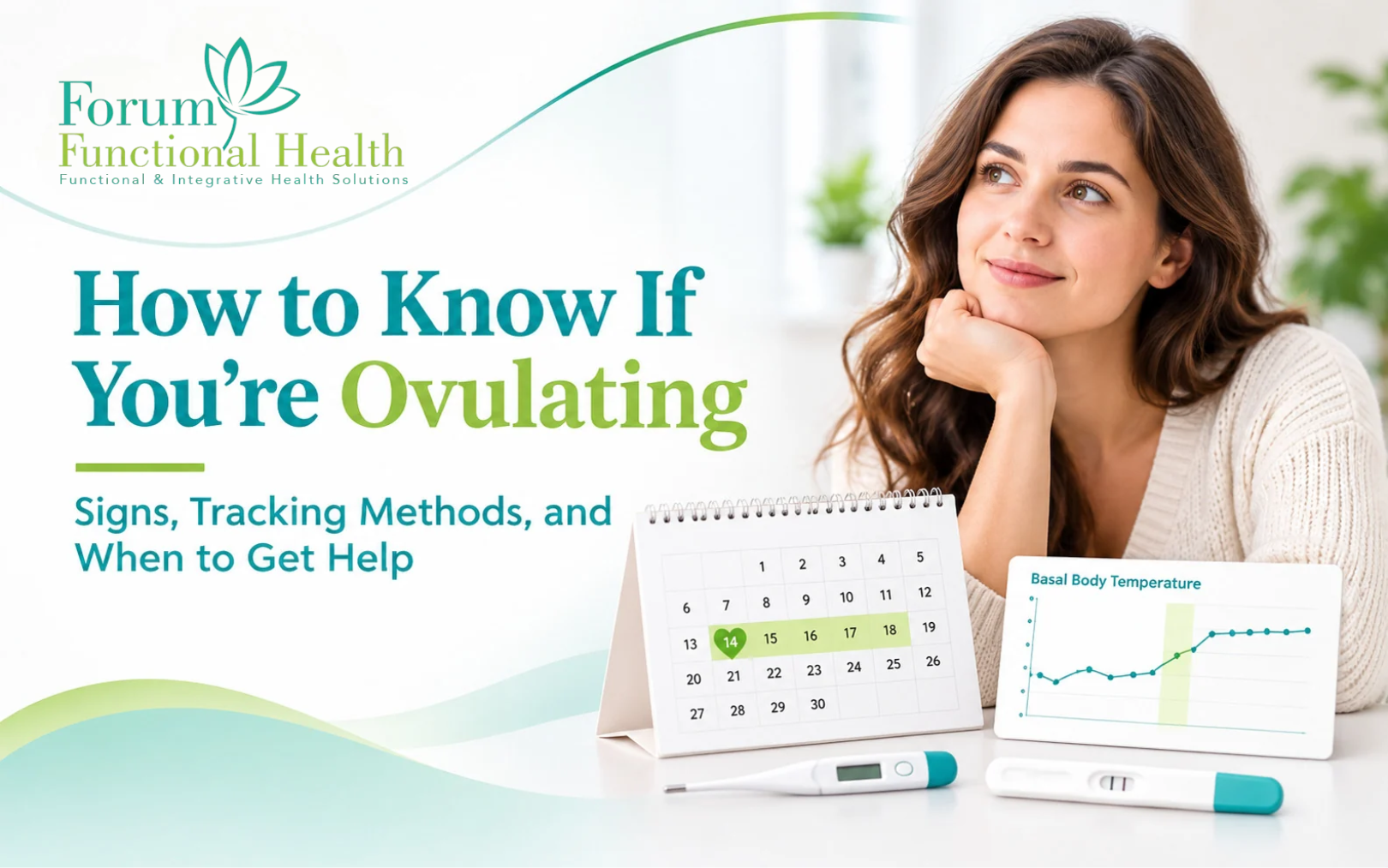
Understanding your menstrual cycle can provide valuable information about your reproductive health, especially if you’re trying to conceive. If you’re wondering how to know if you’re ovulating, the answer involves more than counting the days between periods. Changes in cervical mucus, a rise in luteinizing hormone (LH), basal body temperature patterns, and progesterone levels can all provide clues about when ovulation happens.
Ovulation is the process of releasing an egg from an ovary. It usually occurs once during a menstrual cycle, although the timing can vary considerably. Some women notice physical symptoms around ovulation, while others experience no noticeable changes.
It’s also important to understand the difference between predicting ovulation and confirming that it likely occurred. An ovulation predictor kit, for example, detects a hormonal signal that usually precedes egg release. A progesterone blood test performed at the appropriate time can provide stronger evidence that ovulation has taken place.
Whether you’re trying to conceive, experiencing irregular periods, or concerned about conditions such as polycystic ovary syndrome (PCOS), understanding these signs can help you make informed decisions about your reproductive health.
What Is Ovulation and Why Does It Matter?
Ovulation is the release of a mature egg from one of the ovaries. It is a key event in the menstrual cycle because pregnancy can occur when sperm fertilizes the released egg.
Here’s how the process generally works:
-
Follicular phase: The menstrual cycle begins with the first day of menstrual bleeding. Follicle-stimulating hormone (FSH) encourages ovarian follicles to develop, and one typically becomes dominant.
-
Estrogen production: The developing follicle produces estrogen, which helps prepare the uterine lining and contributes to the hormonal signal that triggers ovulation.
-
LH surge: A rapid increase in luteinizing hormone signals the ovary to release the mature egg.
-
Ovulation: The egg is released and enters the fallopian tube, where fertilization may occur.
-
Luteal phase: The remaining follicle becomes the corpus luteum, which produces progesterone to support the uterine lining.
The released egg generally remains capable of fertilization for approximately 12–24 hours. Sperm can survive in the reproductive tract for up to five days under favorable conditions.
This creates the fertile window, which includes approximately the five days before ovulation and the day of ovulation.
Ovulation does not always happen on day 14. Although day 14 is often used as an example for a 28-day cycle, individual cycles differ, and ovulation timing can change from one month to another.
When ovulation is irregular or absent, identifying the fertile window becomes more difficult. This can affect the chances of conception and may indicate an underlying reproductive or hormonal concern.
How to Know If You’re Ovulating: 7 Common Signs to Watch For
Several physical changes may occur around ovulation. These signs can help you recognize your fertile days, but none of them independently proves that an egg has been released.
1. Changes in Cervical Mucus
Cervical mucus is one of the most noticeable natural signs of approaching ovulation.
As estrogen levels increase during the follicular phase, cervical mucus often becomes:
-
Clear or transparent.
-
Thin and slippery.
-
Stretchy, similar to raw egg whites.
-
More noticeable than at other times in the cycle.
This type of mucus helps sperm move through the cervix and survive in the reproductive tract.
These changes commonly appear in the days leading up to ovulation. After ovulation, progesterone usually makes cervical mucus thicker, stickier, or less noticeable.
However, cervical mucus can also be affected by medications, sexual activity, infections, and other factors. It suggests fertility but does not confirm egg release.
2. Mild Pelvic Pain or Ovulation Cramps (Mittelschmerz)
Some women experience mild discomfort around the time of ovulation. This is commonly called mittelschmerz, a German term meaning middle pain.
Possible sensations include:
-
A brief sharp sensation on one side of the lower abdomen.
-
Mild cramping.
-
A dull pelvic ache.
-
Temporary discomfort that lasts minutes or hours.
The pain may occur on the side of the ovary releasing the egg, although the side can vary between cycles.
Not every woman experiences ovulation pain. Severe, persistent, or worsening pelvic pain should not automatically be attributed to ovulation because ovarian cysts, endometriosis, infections, and other conditions can cause similar symptoms.
3. Changes in Basal Body Temperature
Basal body temperature (BBT) is your body’s resting temperature immediately after waking.
Following ovulation, progesterone causes a small increase in resting body temperature. This rise is often approximately 0.5–1°F, although individual patterns vary.
To track BBT:
-
Use a basal thermometer.
-
Take your temperature immediately after waking.
-
Measure it before getting out of bed, eating, or drinking.
-
Try to measure at approximately the same time each morning.
-
Record the results throughout your cycle.
A sustained temperature increase across several days may provide retrospective evidence that ovulation occurred.
However, BBT is more useful for identifying a pattern after ovulation than predicting when it will happen. Fever, disrupted sleep, alcohol, and inconsistent measurement times can affect readings.
4. Increased Sex Drive
Some women notice an increase in sexual desire around their fertile window.
Changes in estrogen and other reproductive hormones may contribute to this pattern. However, libido is influenced by several factors, including sleep, emotional well-being, relationships, medications, and general health.
An increase in sex drive may coincide with ovulation, but it is not a reliable way to establish whether an egg has been released.
5. Breast Tenderness
Breast tenderness or sensitivity may occur during different stages of the menstrual cycle.
Hormonal fluctuations involving estrogen and progesterone can contribute to changes in breast tissue and sensitivity.
Some women notice tenderness around ovulation, while others experience it primarily before menstruation.
Because this symptom is not specific to ovulation, it should be interpreted alongside other cycle observations rather than used as confirmation.
6. Changes in Bloating or Abdominal Sensations
Some women experience temporary bloating, abdominal fullness, or mild discomfort around ovulation.
Hormonal changes may influence fluid retention and gastrointestinal sensations, although these symptoms have several possible explanations.
Pay attention to whether bloating follows a recurring pattern in your menstrual cycle.
Persistent bloating, severe abdominal pain, or symptoms that interfere with daily activities deserve medical evaluation rather than being automatically considered normal ovulation symptoms.
7. Changes in Cervical Position
The cervix can change slightly throughout the menstrual cycle.
Around the fertile window, it may become:
-
Higher in the vaginal canal.
-
Softer to the touch.
-
Slightly more open.
-
More difficult to reach.
After ovulation, it may become lower, firmer, and less open.
Some women monitor cervical position as part of fertility awareness. However, interpreting these changes can be difficult, and cervical position varies between individuals.
It is best considered an additional observation rather than a dependable confirmation method.
How to Track Ovulation at Home
If you’re trying to understand how to track ovulation, combining observations with appropriate home testing can provide a more useful picture than relying on a calendar alone.
Different methods measure different aspects of the reproductive cycle.
| Tracking Method | What It Measures | When to Use It | What It Can Tell You | Limitations |
|---|---|---|---|---|
| Ovulation predictor kits | Urinary LH | Before expected ovulation | Predicts an approaching ovulation | Does not confirm egg release |
| LH surge tracking | Changes in luteinizing hormone | Around the fertile window | Identifies a hormonal surge | Some surges do not result in ovulation |
| Basal body temperature | Resting body temperature | Every morning | May show ovulation retrospectively | Cannot reliably predict ovulation |
| Cervical mucus monitoring | Mucus consistency and quantity | Throughout the cycle | Helps identify fertile days | Subjective and affected by other factors |
| Menstrual tracking apps | Period dates and cycle patterns | Throughout the cycle | Estimates possible fertile days | Calendar predictions may be inaccurate |
| Combined tracking | Multiple cycle indicators | Throughout the cycle | Provides a broader picture | Still may require clinical confirmation |
Ovulation Predictor Kits (OPKs)
Ovulation predictor kits are widely available at pharmacies and detect an increase in LH in urine.
The LH surge typically occurs approximately 24–36 hours before ovulation, although timing varies.
For accurate use:
-
Follow the manufacturer’s instructions.
-
Begin testing according to your usual cycle length.
-
Test consistently during the expected fertile window.
-
Avoid drinking excessive fluids immediately before testing.
-
Record positive and negative results.
A positive test indicates an LH surge, not guaranteed egg release.
Basal Body Temperature Charting
BBT charting helps you understand your hormonal pattern over several cycles.
Look for a sustained temperature shift rather than interpreting one unusually high reading.
This method can be useful for reviewing whether ovulation may have occurred, but it is less helpful when you’re trying to identify the best days for intercourse in the current cycle.
Cervical Mucus Monitoring
Observe changes in cervical mucus throughout your cycle.
Clear, slippery, stretchy mucus generally indicates that estrogen is increasing and the fertile window may be approaching.
Recording these observations alongside LH results may help you understand your individual cycle patterns.
Menstrual Cycle Tracking Apps
Cycle tracking apps allow you to record:
-
Period start and end dates.
-
Cycle length.
-
Bleeding patterns.
-
Cervical mucus changes.
-
Symptoms.
-
Ovulation test results.
Apps generally estimate ovulation using previous cycle information. They cannot independently establish when an egg will be released, especially when cycles are irregular.
Combining Multiple Tracking Methods
Combining cervical mucus monitoring, LH testing, and BBT charting can provide more information than using a single method.
For example, fertile-quality cervical mucus may appear before a positive LH test, while a sustained temperature rise afterward may suggest that ovulation occurred.
Still, home tracking has limitations. If results are consistently confusing or your periods are irregular, a healthcare professional can help determine whether further evaluation is appropriate.
Medical reference: ACOG – Fertility Awareness-Based Methods of Family Planning.
How to Tell If You Ovulated: Which Methods Are Most Reliable?
The most useful way to determine whether ovulation occurred depends on your menstrual history, symptoms, and medical circumstances.
Some methods predict an approaching egg release, while others provide evidence after the event.
Here’s how they compare:
| Method | Predicts Ovulation | Provides Evidence of Ovulation |
|---|---|---|
| Cervical mucus | Yes, indirectly | No |
| LH ovulation test | Yes | No, indirect evidence only |
| Basal body temperature | No | Yes, retrospectively |
| Blood progesterone test | No | Yes, when appropriately timed |
| Transvaginal ultrasound | Can help monitor follicular development | Can provide clinical evidence of ovulation |
Progesterone Blood Testing
Progesterone is produced primarily by the corpus luteum after ovulation.
A blood test measuring progesterone approximately seven days before the expected next period can help determine whether ovulation likely occurred.
This timing is important. A progesterone test is not always supposed to be performed on day 21. That timing is only appropriate for certain women with approximately 28-day cycles.
According to the American Society for Reproductive Medicine (ASRM), a progesterone concentration above 3 ng/mL provides presumptive evidence of recent ovulation.
However, progesterone levels fluctuate throughout the day. A single measurement cannot reliably evaluate the overall quality of the luteal phase.
Ultrasound Monitoring
A transvaginal ultrasound allows a healthcare professional to examine ovarian follicles and observe changes associated with follicular development and ovulation.
Depending on when the scans are performed, ultrasound monitoring may help assess:
-
Whether a dominant follicle is developing.
-
The approximate timing of ovulation.
-
Changes in the follicle after egg release.
-
Other ovarian or uterine findings.
Ultrasound is particularly useful in selected fertility evaluations and treatment cycles, although it is not necessary for everyone.
The key distinction: LH tests help predict ovulation, while appropriately timed progesterone testing and clinical ultrasound monitoring can provide stronger evidence that ovulation occurred.
Reference: ASRM – Fertility Evaluation of Infertile Women.
How to Know If You’re Ovulating With Irregular Periods
Knowing how to identify ovulation can be more challenging when menstrual cycles are irregular.
If your cycle length changes considerably from month to month, calendar-based predictions may not accurately identify your fertile window.
For example, someone whose cycles vary between 30 and 45 days may ovulate at different times in different months.
Why Irregular Periods Affect Ovulation Tracking
Ovulation does not always occur at the same point in every menstrual cycle.
Irregular periods may be associated with:
-
Delayed ovulation.
-
Inconsistent follicular development.
-
Hormonal conditions.
-
Occasionally, cycles in which ovulation does not occur.
Women with longer cycles may still ovulate, but their fertile window may occur later than expected.
Women with shorter cycles may ovulate earlier.
PCOS and Irregular Ovulation
Polycystic ovary syndrome is a common hormonal and metabolic condition that can interfere with normal ovulation.
Some women with PCOS experience:
-
Infrequent periods.
-
Long menstrual cycles.
-
Irregular bleeding.
-
Acne.
-
Excess facial or body hair.
-
Difficulty conceiving.
PCOS does not affect every woman in the same way. Not every woman with PCOS has excess weight, insulin resistance, or the same hormonal pattern.
When PCOS interferes with follicular development and ovulation, predicting fertile days using calendar applications becomes less reliable.
Other Hormonal Factors
Thyroid disorders, elevated prolactin, hypothalamic dysfunction, and primary ovarian insufficiency can also contribute to irregular or absent ovulation.
These conditions affect different parts of the hormonal system responsible for regulating the menstrual cycle.
What Can Help?
If you’re experiencing irregular cycles, consider:
-
Recording menstrual dates over several months.
-
Observing cervical mucus changes.
-
Using LH tests according to product instructions.
-
Recording any consistent temperature changes.
-
Discussing persistent irregularities with an OB-GYN.
If you’re trying to conceive, don’t assume that irregular periods automatically mean pregnancy is impossible. However, they are a good reason to consider an earlier fertility evaluation.
Are Ovulation Tests Accurate With PCOS?
Ovulation predictor kits can be less reliable for some women with PCOS because their LH levels may already be elevated before the expected ovulation period.
Normally, LH rises significantly before an egg is released. However, some women with PCOS experience higher baseline LH levels or irregular LH patterns.
This can produce:
-
Repeated positive ovulation tests.
-
Positive results without subsequent egg release.
-
Difficulty identifying a clear LH surge.
-
Confusing results across several weeks.
A positive OPK therefore does not guarantee that ovulation occurred.
What Should Women With PCOS Do?
If you’re receiving repeated positive ovulation test results, consider discussing alternative assessment methods with your healthcare professional.
Depending on your medical history, these may include:
-
Appropriately timed progesterone blood testing.
-
Menstrual history and symptom assessment.
-
Thyroid and other targeted hormonal testing.
-
Transvaginal ultrasound when clinically indicated.
The goal is to understand whether ovulation is occurring, not simply to identify a positive test result.
Signs You Are Not Ovulating
The absence of regular ovulation is called anovulation.
Some women experience noticeable menstrual changes, while others may have less obvious symptoms.
Possible signs you are not ovulating include:
-
Absent periods: Going several months without menstrual bleeding may indicate an ovulatory or other hormonal problem.
-
Consistently irregular cycles: Very unpredictable menstrual cycles can suggest inconsistent ovulation.
-
Unpredictable bleeding: Bleeding may occur without a normal ovulatory cycle.
-
No identifiable LH surge: This may indicate that a surge was missed or that ovulation is not occurring, but home tests are not definitive.
-
No sustained temperature shift: This may suggest the absence of a typical post-ovulation temperature pattern, although BBT is imperfect.
-
Difficulty conceiving: Irregular or absent ovulation can reduce opportunities for conception.
These observations are not sufficient to diagnose anovulation.
For example, failing to detect an LH surge does not automatically mean you did not ovulate. You may have tested too early, too late, or missed a short surge.
If your periods are consistently irregular or absent, professional assessment is more useful than relying exclusively on home tracking.
Can You Have a Period Without Ovulating?
Yes. You can experience vaginal bleeding without having ovulated. This is commonly called anovulatory bleeding.
A typical menstrual period follows ovulation. After the egg is released, progesterone helps maintain the uterine lining. If pregnancy does not occur, progesterone levels decline, and the lining is shed.
However, bleeding can also occur when ovulation does not happen.
Understanding the Difference
| Type of Bleeding | What Happens |
|---|---|
| Menstrual period | The uterine lining sheds following the hormonal changes of an ovulatory cycle |
| Anovulatory bleeding | Bleeding occurs during a cycle without egg release |
| Hormone-related irregular bleeding | Fluctuations in reproductive hormones can cause unpredictable shedding of the uterine lining |
Anovulatory bleeding may be light, heavy, prolonged, or unpredictable.
This is why counting every episode of bleeding as proof of a normal ovulatory cycle can be misleading.
If you experience repeated irregular bleeding, prolonged bleeding, or unusually heavy periods, consult an OB-GYN to identify the possible cause.
What Hormones Affect Ovulation?
Ovulation depends on communication between the brain, pituitary gland, and ovaries. This coordinated system is known as the hypothalamic-pituitary-ovarian (HPO) axis.
Several hormones work together to regulate follicular development, egg release, and the menstrual cycle.
Estrogen
Estrogen is produced primarily by developing ovarian follicles during the first half of the cycle.
It helps the uterine lining grow and contributes to the hormonal signals that trigger the LH surge.
Luteinizing Hormone (LH)
LH is released by the pituitary gland.
A sudden increase in LH triggers the final stages of follicular development and usually precedes ovulation.
This is the hormone measured by most home ovulation predictor kits.
Follicle-Stimulating Hormone (FSH)
FSH stimulates ovarian follicles to develop during the follicular phase.
It supports the growth of follicles containing immature eggs.
Progesterone
Progesterone rises after ovulation because it is produced by the corpus luteum.
It helps prepare and maintain the uterine lining for possible implantation.
A progesterone blood test can help assess whether recent ovulation likely occurred.
Thyroid Hormones
Thyroid hormones influence several processes involved in reproductive health.
Both underactive and overactive thyroid conditions can be associated with menstrual irregularities and reproductive difficulties.
The Hypothalamic-Pituitary-Ovarian Axis
The hypothalamus releases gonadotropin-releasing hormone (GnRH), which signals the pituitary gland to release FSH and LH.
These hormones then communicate with the ovaries.
Disruptions in this system can affect follicular development, hormone production, and ovulation.
What Can Cause Irregular or Absent Ovulation?
Irregular ovulation does not have one universal cause. Different reproductive, endocrine, nutritional, and medical factors may contribute.
Common possibilities include:
1. Polycystic ovary syndrome (PCOS)
PCOS can interfere with normal follicular development and lead to irregular or absent ovulation.
2. Thyroid disorders
Hypothyroidism and hyperthyroidism can disrupt menstrual patterns and reproductive hormone regulation.
3. Hypothalamic dysfunction
Changes in energy availability, significant physical stress, inadequate nutrition, or excessive exercise can interfere with the hormonal signals that regulate ovulation.
4. Primary ovarian insufficiency
Primary ovarian insufficiency occurs when ovarian function declines before age 40. It may cause irregular or absent periods and reduced estrogen production.
5. Significant weight changes or inadequate energy intake
Substantial changes in body weight or insufficient calorie intake can affect the HPO axis and interfere with normal reproductive hormone signaling.
6. Excessive exercise
Intense physical activity combined with inadequate nutritional intake can contribute to functional hypothalamic amenorrhea.
7. Certain medications and medical conditions
Some medications and underlying medical conditions can influence menstrual regularity and ovulatory function.
Identifying the contributing factor requires an individualized assessment. Not every woman with irregular ovulation needs the same tests or treatment.
When to See a Doctor If You’re Not Ovulating
You should consider professional evaluation if your periods are consistently irregular, you suspect an ovulation problem, or you’re having difficulty conceiving.
The appropriate timing depends on your age, menstrual history, and reproductive health.
When Should You Seek a Fertility Evaluation?
The American Society for Reproductive Medicine provides the following general recommendations:
| Age or Circumstance | When to Seek Evaluation |
|---|---|
| Younger than 35 | After 12 months of trying to conceive |
| Age 35–39 | After 6 months of trying |
| Older than 40 | Consider more immediate evaluation |
| Irregular or absent periods | Seek evaluation without waiting for the usual timeline |
| Known reproductive conditions | Consider earlier assessment |
| Recurrent pregnancy loss | Discuss evaluation with a healthcare professional |
These timelines apply to people trying to conceive without a known condition that warrants earlier assessment.
What Happens During an Ovulation Evaluation?
An OB-GYN or reproductive endocrinologist may review several aspects of reproductive health.
Menstrual and reproductive history
Your healthcare professional may ask about:
-
Average menstrual cycle length.
-
Frequency and duration of periods.
-
Changes in bleeding patterns.
-
Previous pregnancies.
-
Ovulation tracking results.
-
How long you’ve been trying to conceive.
Hormonal assessment
Depending on your symptoms, evaluation may include selected blood tests, such as:
-
Progesterone to assess recent ovulation.
-
TSH to evaluate thyroid function when indicated.
-
FSH and estradiol in selected cases.
-
Prolactin when symptoms or menstrual patterns suggest elevated levels.
-
Other targeted hormone tests when clinically appropriate.
Imaging and additional fertility testing
A transvaginal ultrasound may help assess ovarian and uterine structures.
A complete fertility evaluation may also examine the fallopian tubes and include semen analysis when applicable. Ovulation is only one part of the reproductive process.
If you’re experiencing symptoms beyond irregular ovulation, the article Infertility Symptoms for Women provides additional information about possible fertility-related concerns.
How Forum Functional Health Center Supports Women’s Hormonal and Fertility Health
Understanding ovulation is an important part of reproductive health, but persistent cycle irregularities may involve several interconnected factors.
For women seeking a broader understanding of their hormonal health, Forum Functional Health Center provides individualized functional medicine services in McKinney, Texas.
The center’s approach considers personal health history, symptoms, menstrual patterns, and relevant lifestyle factors when exploring possible contributors to hormonal concerns.
Individualized Health History
A detailed health history can help identify patterns that deserve further investigation.
This may include reviewing:
-
Menstrual cycle regularity.
-
Previous reproductive health concerns.
-
Changes in energy and general well-being.
-
Existing medical diagnoses.
-
Medications and supplements.
-
Previous laboratory findings.
Hormonal Health Assessment
Hormonal concerns should be evaluated according to individual symptoms and medical history.
Depending on the circumstances, a healthcare professional may consider thyroid function, reproductive hormone patterns, or other relevant factors.
Testing should be selected based on clinical indications rather than automatically ordering extensive hormone panels for every patient.
Review of Menstrual and Ovulation Patterns
Keeping a menstrual and ovulation tracking record can provide useful information during an evaluation.
Reviewing cycle length, bleeding patterns, cervical mucus observations, and LH test results may help identify patterns that deserve further assessment.
Nutrition and Lifestyle Considerations
Nutritional intake, sleep, physical activity, and adequate energy availability can influence reproductive hormone regulation.
Individualized guidance may help identify lifestyle factors relevant to menstrual health without assuming that lifestyle changes alone can resolve an underlying fertility condition.
Digestive health may also be considered when relevant to a person’s symptoms and medical history, rather than assuming that digestive problems are the cause of infertility.
Coordinating Functional and Conventional Fertility Care
Functional medicine can complement conventional reproductive healthcare, but it should not replace an appropriate gynecological or fertility evaluation.
Conditions such as PCOS, primary ovarian insufficiency, endometriosis, tubal disorders, and other reproductive conditions may require specialist assessment and evidence-based treatment.
Forum Functional Health Center offers Infertility in Women McKinney services for individuals interested in exploring hormonal and reproductive health concerns.
You can also learn more about the center’s Functional Medicine approach and available Functional Health Services.
For additional educational information, explore the article 4 Causes of Female Infertility.
Any discussion of supplements should be individualized. Supplements are not universal fertility treatments, and their appropriateness depends on nutritional status, medical history, medications, and clinical needs. Learn more about the center’s Supplements offerings.
FAQs About Ovulation
1. How do I know if I’m ovulating without a test?
You may notice clear, slippery cervical mucus, mild pelvic discomfort, increased sexual desire, or changes in your menstrual cycle. A sustained basal body temperature rise may provide retrospective evidence of ovulation. However, not everyone experiences noticeable symptoms, and physical changes alone cannot confirm that an egg was released.
2. What are the most common signs of ovulation?
Common signs include clear, stretchy cervical mucus, mild one-sided pelvic pain, increased libido, and a small rise in basal body temperature after ovulation. Some women also experience breast tenderness or temporary bloating. These symptoms vary between individuals and may occur for reasons unrelated to ovulation.
3. Can you ovulate without experiencing symptoms?
Yes. Many women ovulate without experiencing noticeable physical symptoms. They may not recognize cervical mucus changes, pelvic discomfort, or other signs. A lack of symptoms does not mean that ovulation is absent. If confirmation is medically necessary, appropriately timed progesterone testing or ultrasound monitoring may provide additional information.
4. How many days after your period do you ovulate?
Ovulation timing varies depending on menstrual cycle length and the length of the follicular phase. It does not always happen on day 14. For a typical 28-day cycle, ovulation may occur around day 14, but women with shorter or longer cycles may ovulate earlier or later.
5. Can you have a period without ovulating?
Yes. Anovulatory bleeding occurs when the uterine lining sheds without a preceding ovulation event. Hormonal fluctuations can cause bleeding that resembles a regular period. Therefore, having monthly bleeding does not always prove that an egg was released. Repeated irregular bleeding deserves medical evaluation.
6. Are ovulation predictor kits accurate with PCOS?
They can be less reliable for some women with PCOS because baseline LH levels may already be elevated. This can produce repeated or misleading positive results. A positive test does not guarantee egg release. Depending on individual circumstances, progesterone testing or ultrasound monitoring may help clarify whether ovulation occurred.
7. Does a positive ovulation test mean I released an egg?
No. A positive ovulation predictor kit detects an increase in luteinizing hormone, which usually precedes ovulation by approximately 24–36 hours. However, an LH surge does not guarantee that the follicle released an egg. Progesterone testing or clinically indicated ultrasound monitoring can provide stronger evidence.
8. How can I confirm that I ovulated?
A progesterone blood test performed approximately seven days before your expected next period can provide evidence of recent ovulation. A sustained basal body temperature rise may also suggest that ovulation occurred. Ultrasound monitoring can provide additional clinical information when needed. The most appropriate method depends on your menstrual history.
9. Can irregular periods mean I’m not ovulating?
Yes. Irregular periods can indicate delayed, inconsistent, or absent ovulation. Conditions such as PCOS, thyroid disorders, hypothalamic dysfunction, and primary ovarian insufficiency may contribute. However, irregular cycles do not automatically mean that ovulation never occurs. A healthcare professional can investigate the underlying cause.
10. When should I see a doctor about irregular ovulation?
Consider seeing an OB-GYN if you experience absent periods, consistently irregular cycles, or suspected PCOS. If you’re trying to conceive, seek evaluation after 12 months if younger than 35 or after six months at age 35 or older. Women over 40 and those with known reproductive conditions should consider earlier evaluation.
Take the Next Step Toward Understanding Your Hormonal Health
Understanding your ovulation patterns can help you make more informed decisions about reproductive health and family planning.
Changes in cervical mucus, LH levels, and basal body temperature may provide useful clues, but persistent irregularities deserve attention. If you’re experiencing unpredictable periods, suspected PCOS, or difficulty conceiving, an individualized evaluation can help clarify what may be happening.
Forum Functional Health Center offers female infertility and hormonal health services in McKinney, TX, for individuals interested in a personalized approach to understanding their health.
The center serves the McKinney community and surrounding North Texas areas, including Allen and Frisco. Individuals from the wider Dallas–Fort Worth region can also explore available services.
Special Consultation Offer
$300
Regularly $500
Discuss your hormonal health and reproductive concerns through an individualized consultation.
Forum Functional Health Center
McKinney, Texas, USA
Phone: (214) 550-3951
Explore Personalized CareContact Forum Functional Health