
Comprehensive Thyroid Disease Treatment in Texas: A Deep Guide to Hashimoto’s Disease & Hypothyroidism Symptoms
Thyroid disorders are among the most overlooked health concerns in the United States, yet they impact millions of individuals each year—especially women. Fatigue, brain fog, digestive issues, or sudden weight changes often go undiagnosed or dismissed as “stress” or “aging.” But for many Texas residents, these challenges trace back to thyroid dysfunction such as Hashimoto disease Texas patients frequently experience or the progression of persistent Hypothyroidism symptoms. At Forum Functional Health, we use a functional, root-cause-focused approach to restore balance, heal inflammation, and support long-term thyroid wellness.
Understanding the Thyroid: The Command Center of Your Metabolism
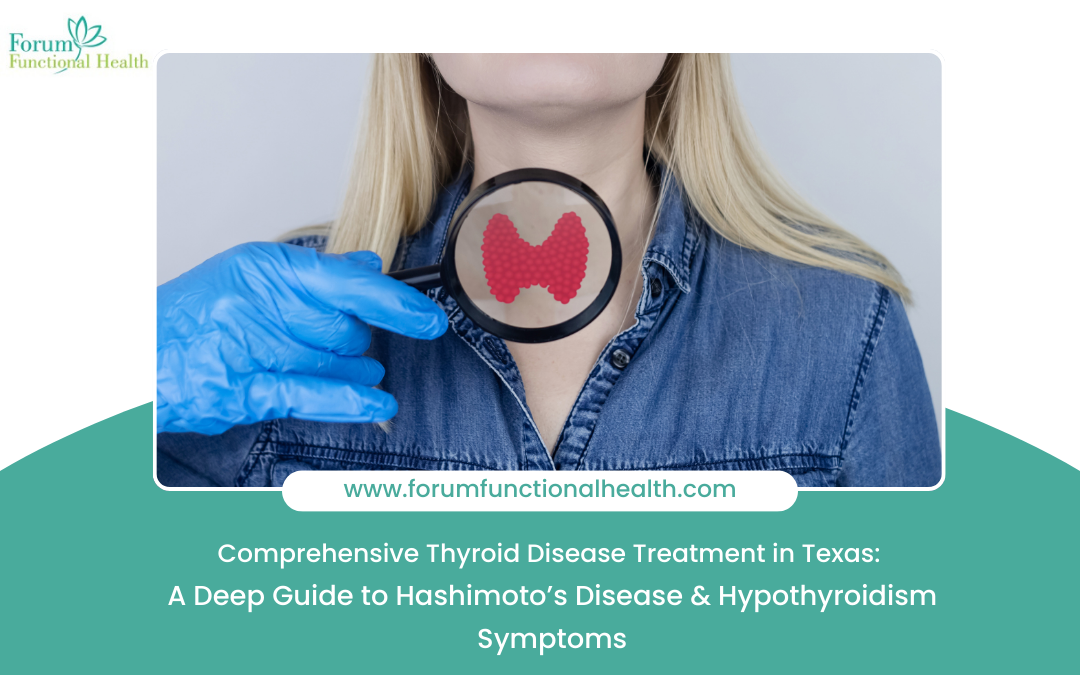
Your thyroid is a butterfly-shaped gland located at the front of your neck. Despite its small size, it controls several major functions throughout the body. When the thyroid isn’t working properly, every system can be affected.
Key Body Functions Regulated by the Thyroid
- Metabolism and weight regulation
- Energy and heat production
- Heart rate and blood pressure
- Hormone balance and menstrual cycles
- Cognitive function and mood
- Digestion and nutrient absorption
- Skin, hair, and nail health
Even a minor imbalance can lead to widespread health issues, which is why early, accurate diagnosis is essential.
The Spectrum of Thyroid Disorders
Thyroid disease doesn’t look the same for everyone. It exists on a spectrum, with different root causes and symptoms.
1. Hypothyroidism (Underactive Thyroid)
Your thyroid does not produce enough hormones. This is the most common thyroid disorder in the United States.
2. Hyperthyroidism (Overactive Thyroid)
Your thyroid creates too much hormone, increasing metabolism and energy expenditure.
3. Hashimoto’s Thyroiditis
An autoimmune disease and the leading cause of hypothyroidism in the U.S., including many Hashimoto disease Texas cases.
4. Thyroid Nodules & Goiter
Lumps, cysts, or gland enlargement caused by inflammation, iodine imbalance, or immune dysfunction.
5. Postpartum Thyroiditis
A temporary or long-term thyroid issue triggered after pregnancy.
What Are Hypothyroidism Symptoms?
Recognizing Hypothyroidism symptoms early can prevent long-term complications. However, these symptoms often develop slowly and mimic other common conditions.
Most Common Hypothyroidism Symptoms
- Persistent fatigue, daytime sleepiness, low stamina
- Unexplained weight gain or difficulty losing weight
- Sensitivity to cold
- Depression, anxiety, or mood instability
- Memory issues, brain fog, slowed thinking
- Constipation and bloating
- Dry skin, thinning hair, brittle nails
- Menstrual irregularities or fertility challenges
- High cholesterol levels
- Slow heart rate
- Muscle cramps or stiffness
Hypothyroidism often affects women more than men, especially during reproductive years, postpartum, and menopause.
Deep Dive: What Is Hashimoto’s Disease?
Hashimoto’s Thyroiditis is an autoimmune condition where the immune system attacks the thyroid, causing chronic inflammation. Over time, this inflammation leads to reduced thyroid hormone production.
It is the most common cause of hypothyroidism in adults across the USA.
Why Hashimoto’s Happens
While no single cause is known, research shows that Hashimoto’s may develop due to:
- Genetic predisposition
- Leaky gut or intestinal permeability
- Chronic stress and adrenal imbalance
- Viral infections or chronic immune triggers
- Environmental toxins (fluoride, pesticides, endocrine disruptors)
- Nutrient deficiencies (iodine, selenium, vitamin D, zinc)
- Hormonal changes such as pregnancy or menopause
This is why treating Hashimoto’s requires more than medication—it requires restoring immune balance and reducing inflammation.
Why Thyroid Disorders Are Common Among Texas Patients
Several geographic and lifestyle factors affect thyroid health in the USA and particularly in Texas:
Texas-Associated Thyroid Stressors
- Higher exposure to environmental toxins and pollutants
- Hard water minerals affecting iodine balance
- Stressful work-life culture contributing to adrenal exhaustion
- Dietary patterns low in selenium-rich foods
- Rapid hormonal changes in women between ages 30–50
These factors can contribute to both Hashimoto disease Texas prevalence and the progression of Hypothyroidism symptoms.
Functional Medicine: A More Complete Approach to Thyroid Treatment
At Forum Functional Health, our thyroid disease treatment goes beyond symptom management. We investigate deeper, addressing the body’s internal communication systems, immune response, and nutritional imbalances.
Comprehensive Thyroid Testing
Traditional thyroid tests evaluate only TSH, which may appear “normal” even when symptoms are present. We take an expanded functional approach:
Advanced Thyroid Panels We Use
- TSH
- Free T3 and Free T4
- Reverse T3
- Thyroid antibodies (TPO, TgAb)
- Free cortisol levels
- Sex hormone analysis
- Vitamin D, B12, iron, iodine, selenium, zinc
- Inflammation markers (CRP, ESR)
- Gut microbiome testing
This allows us to understand why your thyroid is struggling—not just how.
What Makes Hashimoto’s & Hypothyroidism Different?
Although related, these two conditions behave differently:
| Condition | What’s Happening | Key Feature |
| Hypothyroidism | Low thyroid hormone production | Not always autoimmune |
| Hashimoto’s Disease | Immune system attacking the thyroid | Autoimmune cause of hypothyroidism |
Most patients who present with long-term Hypothyroidism symptoms actually have undiagnosed Hashimoto’s Disease.
Personalized Treatment Strategies at Forum Functional Health
Healing the thyroid requires supporting multiple body systems at once. Our care plans are individualized, comprehensive, and designed to address root causes.
1. Nutritional Therapy for Thyroid Function
Nutrient deficiencies directly impact thyroid hormone production. We focus on replenishing:
- Iodine
- Selenium
- Zinc
- Iron and ferritin
- Omega-3 fatty acids
- Vitamin D3
- B vitamins
We guide you through thyroid-supportive dietary patterns—such as anti-inflammatory, gut-healing, or autoimmune protocols (AIP) when necessary.
2. Autoimmune Support for Hashimoto’s Disease
Because Hashimoto’s is an immune-driven disorder, treatment focuses on calming the immune response and reducing inflammation.
We Address:
- Chronic inflammation
- Leaky gut syndrome
- Food sensitivities (especially gluten, dairy, soy)
- Adrenal fatigue
- Viral triggers
- Environmental toxins
This reduces antibody levels and prevents long-term thyroid damage.
3. Thyroid Hormone Optimization
Some patients benefit from medication—especially if the thyroid is severely under-functioning. We help determine the right approach:
- Natural desiccated thyroid (NDT)
- Synthetic T4 (levothyroxine)
- Combination T3/T4 therapy
We monitor your body’s response closely to ensure stable energy, weight, mood, and metabolism.
4. Stress, Sleep & Adrenal Support
Stress hormones influence thyroid hormones directly. Many people with thyroid disease also have adrenal imbalance.
We support:
- Cortisol regulation
- Sleep cycles
- Nervous system calm
- Emotional resilience
- Healthy daily rhythms
This improves energy, mental clarity, and long-term thyroid balance.
5. Gut Health Restoration
Nearly 70% of your immune system lives in the gut—making gut repair essential for autoimmune thyroid recovery.
We focus on:
- Microbiome balance
- Strengthening the gut barrier
- Reducing inflammation
- Supporting digestion and nutrient absorption
A healthy gut equals a healthier thyroid.
Why Texas Patients Choose Forum Functional Health
We are committed to understanding the whole person, not just lab numbers.
Our Approach Is:
- Compassionate — We listen deeply and support you through every step.
- Root-cause focused — We don’t mask symptoms; we solve them.
- Data-driven — Advanced functional testing guides each decision.
- Personalized — No two thyroid cases are alike, and neither are our treatment plans.
- Empowering — We help you understand your body and regain control of your health.
Our goal is not only to improve your thyroid levels but also to help you feel clear-minded, energetic, stable, and confident again.
When to Seek Thyroid Disease Treatment
You should schedule an evaluation if you are experiencing:
- Increasing Hypothyroidism symptoms
- Unexplained weight gain or hair loss
- Mood instability or anxiety
- Chronic fatigue or low motivation
- Irregular menstrual cycles
- Symptoms that persist even with thyroid medication
- Family history of autoimmune disease
- Signs that may be linked to Hashimoto disease Texas conditions
It’s never too early—or too late—to get answers.
Take the First Step Toward Restoring Your Thyroid Health
Whether you’re struggling with Hashimoto’s Disease, chronic hypothyroidism, or unexplained symptoms, healing is possible. With advanced diagnostics, personalized treatment, and a compassionate approach, Forum Functional Health helps you regain balance, energy, and long-term wellness.
Your thyroid affects every part of your life. Let us help you restore it.
FAQs
1. What are the most common signs of hypothyroidism?
Common hypothyroidism symptoms include fatigue, weight gain, cold intolerance, brain fog, hair thinning, depression, constipation, and menstrual irregularities. Symptoms often appear slowly and may be mistaken for stress or aging.
2. What causes Hashimoto’s disease?
Hashimoto’s is an autoimmune condition triggered by a combination of genetic factors, chronic inflammation, nutrient deficiencies, gut imbalance, hormonal changes, and environmental toxins. It is a leading cause of thyroid problems, including cases of Hashimoto disease Texas patients experience.
3. How is Hashimoto’s different from regular hypothyroidism?
Hypothyroidism simply means the thyroid is underactive. Hashimoto’s is an autoimmune disorder where the immune system attacks the thyroid, eventually causing hypothyroidism. Most chronic hypothyroidism cases are caused by undiagnosed Hashimoto’s.
4. Can thyroid disease be diagnosed with a basic TSH test?
A basic TSH test is often not enough. Many people show normal TSH levels yet still experience symptoms. A full thyroid panel—including Free T3, Free T4, Reverse T3, and thyroid antibodies—is essential for accurate diagnosis.
5. What treatments are available for Hashimoto’s disease?
Treatment can include thyroid hormone replacement, anti-inflammatory nutrition, gut healing, stress management, immune support, and correcting deficiencies like iodine, selenium, and vitamin D. A functional medicine approach addresses both symptoms and root causes.
6. Can thyroid disease be reversed?
While autoimmune conditions like Hashimoto’s cannot be “cured,” symptoms can be greatly improved. Many patients experience restored energy, metabolism, and hormone balance when underlying triggers are treated.
Contact Forum Functional Health