
A Comprehensive Functional Medicine Guide to Female Infertility Care in McKinney, Texas
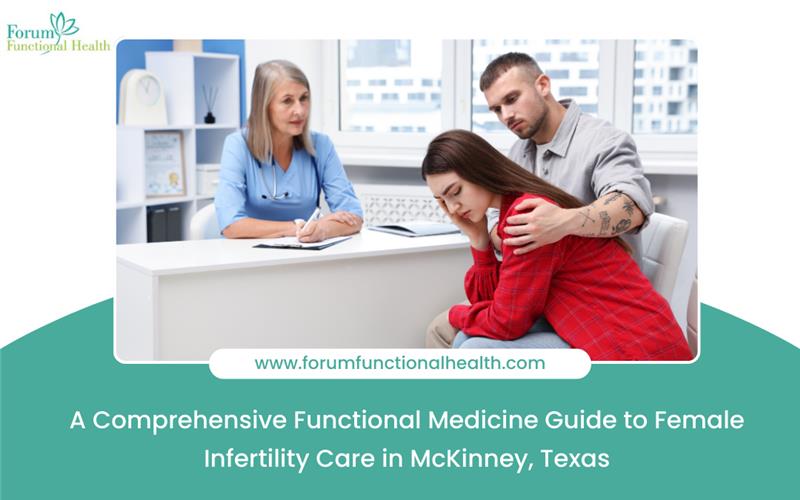
Infertility can be one of the most emotionally complex and physically challenging experiences in a woman’s life. The journey often includes unanswered questions, repeated testing, emotional exhaustion, and the feeling that something is “off” without clear explanations. At Forum Functional Health, we understand that female infertility is not simply a reproductive issue—it is a reflection of the body’s overall health, balance, and resilience.
For women in McKinney seeking fertility medicine for female reproductive health, a functional medicine approach offers clarity, personalization, and hope by addressing the root causes rather than focusing solely on symptoms.
Understanding Female Infertility from a Whole-Body Perspective
Female infertility is medically defined as the inability to conceive after 12 months of regular, unprotected intercourse, or after six months for women over age 35. While this definition provides a clinical guideline, it does not explain why conception has not occurred.
From a functional medicine standpoint, infertility is often the result of multiple interconnected imbalances, including hormonal disruption, metabolic stress, inflammation, nutrient deficiencies, or chronic stress. These issues may exist long before fertility challenges become noticeable.
Rather than labeling infertility as a single diagnosis, functional care views it as a signal that the body needs deeper support and restoration.
Common Causes of Female Infertility
Female fertility depends on the precise coordination of many systems within the body. When one or more systems are out of balance, fertility can be affected.
Hormonal Dysregulation
Hormones act as messengers between the brain and reproductive organs. Imbalances in estrogen, progesterone, follicle-stimulating hormone (FSH), luteinizing hormone (LH), thyroid hormones, or cortisol can disrupt ovulation, implantation, and cycle regularity.
Polycystic Ovary Syndrome (PCOS)
PCOS is one of the leading causes of infertility and is often associated with insulin resistance, elevated androgens, irregular cycles, and chronic inflammation.
Ovulatory Dysfunction
Irregular or absent ovulation may occur due to stress, thyroid imbalance, undernutrition, metabolic dysfunction, or disrupted brain–ovary communication.
Endometriosis and Pelvic Inflammation
Chronic inflammation within the reproductive system can interfere with egg quality, fertilization, and implantation.
Metabolic and Blood Sugar Imbalances
Insulin resistance and unstable blood sugar levels can negatively impact ovarian function, hormone signaling, and ovulation—even in women who appear otherwise healthy.
Nutrient Depletion
Key nutrients such as iron, folate, vitamin D, magnesium, zinc, and omega-3 fatty acids are essential for hormone production, egg quality, and reproductive health.
Identifying these contributors is essential for effective Treatment for Female Infertility.
Why Functional Medicine Matters in Female Fertility Care
Traditional fertility care often focuses on isolated reproductive organs. Functional medicine expands the lens to examine how the entire body influences fertility.
At Forum Functional Health in McKinney, fertility medicine for female patients begins with comprehensive testing and an in-depth review of health history, lifestyle, stress levels, and environmental exposures. This approach allows us to uncover imbalances that may be overlooked in conventional care.
Functional fertility evaluation may include:
- Advanced hormone testing
- Thyroid and adrenal assessment
- Metabolic and insulin analysis
- Inflammatory markers
- Nutrient and micronutrient evaluation
- Gut health assessment
This detailed understanding allows for a truly personalized approach to care.
Personalized Treatment for Female Infertility
There is no universal solution for infertility. Every woman’s body, history, and goals are unique, which is why Treatment for Female Infertility must be individualized.
Hormone Balance and Cycle Support
Restoring hormonal communication between the brain, ovaries, and uterus to promote consistent ovulation and healthy menstrual cycles.
Nutrition-Focused Fertility Support
Nutrition is foundational to fertility. Personalized dietary strategies help stabilize blood sugar, reduce inflammation, and supply the nutrients required for optimal egg development.
Targeted Supplementation
When deficiencies are identified, evidence-based supplements may support mitochondrial function, hormone production, and ovarian health.
Gut and Immune System Optimization
Gut health plays a critical role in estrogen metabolism, nutrient absorption, and immune regulation—all of which directly impact fertility.
Stress and Nervous System Regulation
Chronic stress can suppress ovulation and alter hormone signaling. Supporting the nervous system is a vital component of fertility medicine for female patients and is often overlooked in standard care.
This whole-body strategy not only improves the chances of conception but also supports a healthier pregnancy and postpartum experience.
The Importance of Addressing Root Causes Early
Infertility rarely develops overnight. Many women experience subtle symptoms—irregular cycles, fatigue, mood changes, or digestive issues—years before fertility challenges arise.
By addressing these imbalances early, Treatment for Female Infertility can:
- Improve hormone balance and cycle regularity
- Enhance egg quality
- Reduce inflammation
- Support metabolic and immune health
- Improve overall energy and well-being
Even when pregnancy is not immediate, women often experience significant improvements in their overall health and quality of life.
Female Infertility Care in McKinney, Texas
Local, personalized care is especially important when navigating fertility challenges. Forum Functional Health proudly serves women in McKinney and surrounding North Texas communities with a compassionate, education-focused approach.
Our fertility care emphasizes:
- Extended, unrushed appointments
- Clear explanations and patient education
- Collaborative care planning
- Long-term health optimization
Women deserve fertility care that listens deeply and treats the whole person—not just lab results.
When Should You Seek Support for Female Infertility?
You may benefit from functional fertility care if you:
- Have been trying to conceive without success
- Experience irregular, painful, or absent menstrual cycles
- Have PCOS, endometriosis, or thyroid concerns
- Are over age 35 and planning pregnancy
- Want a proactive, root-cause approach to fertility
Seeking care early can significantly improve outcomes and reduce frustration.
A Compassionate, Hope-Focused Path Forward
Infertility can feel isolating, but it does not define your worth or your future. With the right guidance, testing, and personalized Treatment for Female Infertility, many women are able to restore balance and move forward with renewed hope.
At Forum Functional Health, our approach to fertility medicine for female patients in McKinney is rooted in science, compassion, and respect for the body’s natural intelligence. Our mission is to support not just conception, but lifelong hormonal and reproductive health.
Frequently Asked Questions (FAQs)
What makes functional fertility care different from conventional fertility treatment?
Functional fertility care focuses on identifying and correcting root causes rather than relying solely on symptom-based interventions.
Can functional medicine support women using IVF or other fertility treatments?
Yes. Functional care often complements conventional treatments by improving hormone balance, egg quality, and overall health.
How long does Treatment for Female Infertility usually take?
While timelines vary, many women begin noticing improvements within three to six months of personalized care.
Is fertility optimization only for women actively trying to conceive?
No. Fertility optimization is also beneficial for women planning future pregnancies or wanting to improve hormonal health.
Contact Forum Functional Health