
4 Causes of Female Infertility: What They Mean and What You Can Do
Trying to conceive can be frustrating when pregnancy does not happen as expected—especially when menstrual cycles appear normal and there are few obvious symptoms. The good news is that infertility is not one single condition. Several biological, hormonal, metabolic, and structural factors can affect the ability to conceive, and more than one factor may be involved.
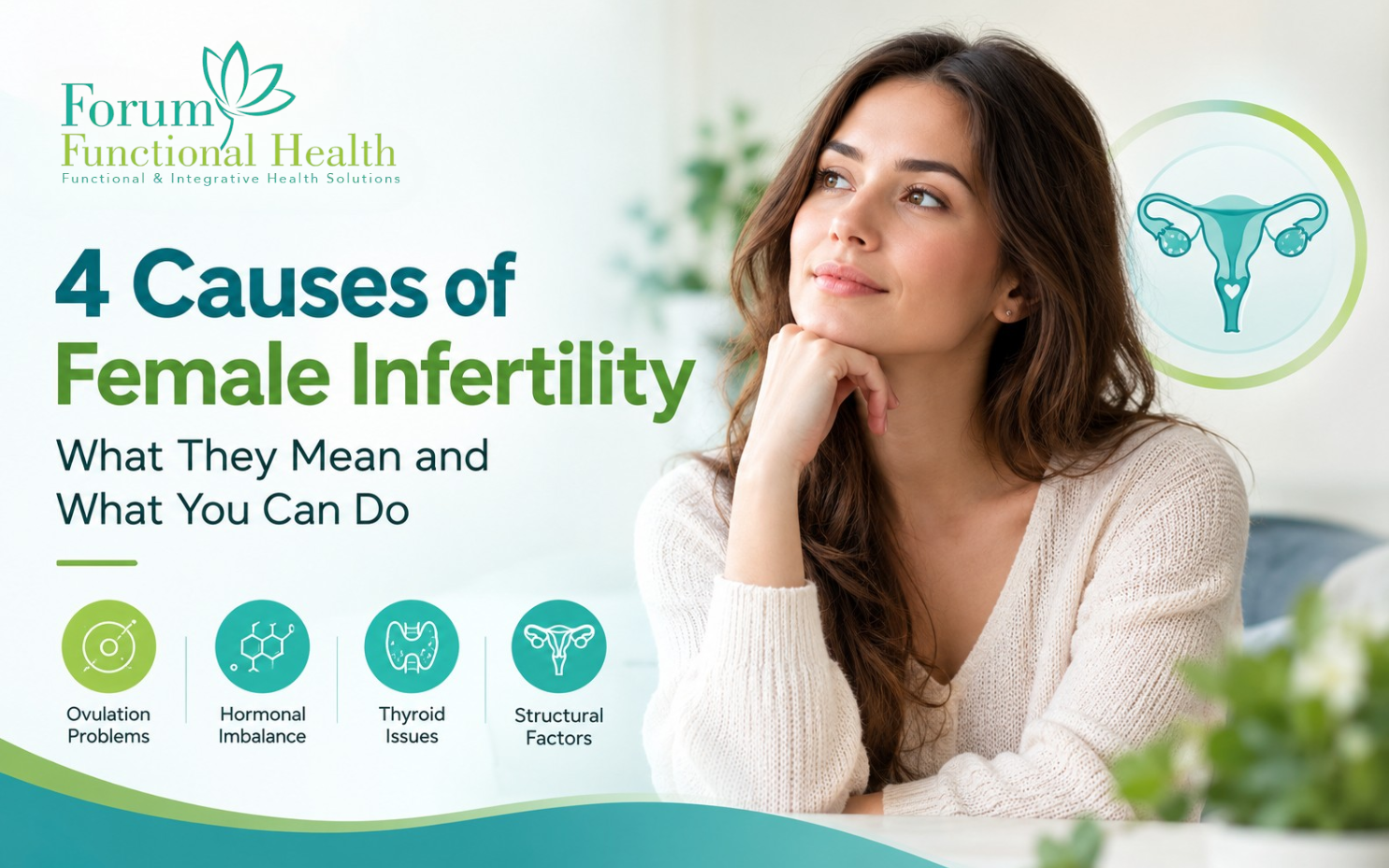
The 4 causes of female infertility discussed most often include ovulation problems, PCOS-related reproductive dysfunction, thyroid and other endocrine factors, and structural problems involving the fallopian tubes or uterus. Fertility evaluation may also identify factors involving ovarian function, endometriosis, age, or the male partner.
Understanding the possible contributors can help you have a more informed conversation with a gynecologist, reproductive endocrinologist, or other qualified healthcare professional.
What Are the 4 Common Causes of Female Infertility?
The four broad categories include ovulation problems, PCOS and related hormonal/metabolic dysfunction, thyroid or other endocrine disorders, and structural reproductive factors. These problems can interfere with egg release, reproductive hormone signaling, sperm-egg interaction, or the uterine environment. A complete fertility evaluation helps determine which factors may be relevant to an individual patient.
- Ovulation problems and infertility
- PCOS and related ovulatory or metabolic dysfunction
- Thyroid and other endocrine factors
- Structural causes involving the fallopian tubes, uterus, or pelvis
What Causes Female Infertility?
Female fertility depends on several coordinated processes. An egg must develop appropriately, ovulation must occur, sperm must reach and fertilize the egg, the embryo must travel through the reproductive tract, and the uterine environment must be capable of supporting implantation and pregnancy.
This is why infertility evaluation generally looks beyond a single hormone or symptom. The American Society for Reproductive Medicine recommends evaluating ovulation, the structure and patency of the reproductive tract, and semen factors when applicable.
Age is another important part of the fertility picture because ovarian reserve and egg quality generally change with age. However, age should not be used to assume that an individual woman will or will not conceive.
1. Ovulation Problems and Infertility
Ovulation is the release of a mature egg from an ovary. Without ovulation, natural conception cannot occur during that cycle.
When ovulation is absent, it is called anovulation. Some women have obvious irregular periods when ovulation is disrupted, while others may have cycles that appear relatively predictable.
The reproductive process is regulated through communication between the hypothalamus, pituitary gland, and ovaries—the hypothalamic-pituitary-ovarian (HPO) axis. Changes affecting this signaling system can influence follicular development, ovulation, estrogen production, and progesterone production after ovulation.
Potential contributors to ovulatory dysfunction include:
- PCOS
- Thyroid disorders
- Primary ovarian insufficiency
- Significant physiological or psychological stress
- Certain medical conditions
- Major changes in energy availability or body weight
- Age-related changes in ovarian function
- Other endocrine or reproductive conditions
The important point is that ovulation problems and infertility are not synonymous with one specific diagnosis. The underlying reason matters.
What Is Anovulation?
Anovulation means that an egg is not released from the ovary during a menstrual cycle. If it occurs repeatedly, conception can become difficult because there is no egg available for fertilization.
Signs that may prompt an evaluation include very irregular cycles, unusually long cycles, absent periods, or difficulty identifying a consistent ovulation pattern.
However, symptoms alone cannot establish whether ovulation is occurring. Depending on the situation, a clinician may use menstrual history, hormone testing, ultrasound, or other methods to evaluate reproductive function.
Can You Have Ovulation Problems With Regular Periods?
Yes. What causes infertility in women with regular periods? There can be several possibilities, and regular bleeding does not automatically prove that ovulation is occurring normally every cycle.
A woman may have apparently regular cycles while other fertility factors are contributing, including subtle ovulatory dysfunction, thyroid disease, tubal problems, endometriosis, age-related changes, or male-factor infertility.
This is one reason fertility evaluation should not stop simply because menstrual cycles look normal.
When Does Ovulation Actually Happen?
The idea that every woman ovulates on “day 14” is misleading. Day 14 is based on a typical 28-day cycle, but menstrual cycles vary considerably.
Ovulation timing is relevant because fertility depends on the relationship between:
- Follicular development
- Ovulation
- Cervical mucus
- Sperm survival
- The post-ovulation luteal phase
- Uterine lining preparation
Ovulation can occur earlier or later than expected. Early or late ovulation should be interpreted in the context of the complete menstrual cycle, ovarian function, age, hormone patterns, and other fertility factors rather than automatically being labeled abnormal.
After ovulation, the luteal phase begins. During this period, the corpus luteum produces progesterone, which helps prepare and maintain the uterine lining for a potential pregnancy.
The term “luteal phase defect” has historically been used to describe inadequate luteal function, but its diagnosis and clinical significance are more complicated than simply obtaining one progesterone measurement. Fertility evaluation should therefore avoid reducing infertility to a single hormone result.
2. PCOS and Infertility
Polycystic ovary syndrome (PCOS) is a common condition associated with reproductive and metabolic changes. One of its important effects can be disrupted or irregular ovulation.
PCOS may involve:
- Irregular or infrequent menstrual periods
- Prolonged menstrual cycles
- Higher androgen levels
- Acne
- Increased facial or body hair
- Scalp hair changes
- Polycystic ovarian morphology on ultrasound in some patients
Not every woman with PCOS has every feature.
How Does PCOS Affect Fertility?
How does PCOS affect fertility? Primarily, PCOS can make ovulation less predictable or less frequent. If ovulation does not occur regularly, there are fewer opportunities for conception.
Metabolic factors can also be relevant. Insulin resistance may occur in people with PCOS across different body sizes, so a woman does not need to be overweight to have PCOS-related metabolic dysfunction.
Lifestyle measures that support metabolic health may be useful for some people with PCOS, but they should not be presented as a cure. Treatment should be individualized according to reproductive goals, symptoms, metabolic health, age, and other clinical factors.
For people discussing nutritional and metabolic support with their healthcare professional, an inositol dietary supplement containing myo-inositol and D-chiro-inositol may be considered in appropriate contexts. This should be viewed as supportive nutritional care—not as a treatment guaranteed to restore fertility.
Can PCOS Affect Fertility Even If You Are Thin?
Yes. PCOS is not defined by body weight.
A woman who is lean or physically active can still experience PCOS, irregular ovulation, elevated androgens, or insulin resistance. Conversely, not every woman with a higher body weight has PCOS.
This distinction matters because fertility care should focus on the individual’s reproductive, hormonal, and metabolic health rather than assuming that body size explains fertility difficulties.
3. Thyroid and Female Fertility
Thyroid hormones influence multiple physiological systems, including reproductive function.
Can Thyroid Problems Cause Infertility?
Yes, thyroid problems can contribute to fertility difficulties in some women, particularly when thyroid dysfunction is significant enough to affect reproductive physiology. Hypothyroidism can be associated with menstrual abnormalities and ovulatory dysfunction.
Potential effects of thyroid dysfunction may include changes in:
- Menstrual cycles
- Ovulation
- Reproductive hormone signaling
- Metabolic function
- Conception
- Pregnancy outcomes
Hashimoto’s thyroiditis is one possible cause of hypothyroidism.
However, thyroid testing and treatment should be individualized. Current ASRM guidance emphasizes that overt hypothyroidism can affect reproductive outcomes, while evidence regarding mild or subclinical thyroid abnormalities and infertility is more nuanced. Routine testing or treatment of every woman with infertility solely because of a mildly abnormal thyroid marker is not necessarily appropriate.
How Hypothyroidism Can Affect Reproductive Health
Thyroid dysfunction may interfere with normal reproductive signaling and menstrual patterns. In some women, addressing an identified thyroid disorder may therefore be an important part of preconception or fertility care.
The key is appropriate evaluation rather than assuming that every fertility problem is caused by the thyroid.
4. Structural Causes of Infertility
Structural factors can affect fertility even when menstrual cycles and reproductive hormones appear reassuring.
Potential structural contributors include:
- Blocked fallopian tubes
- Pelvic adhesions
- Endometriosis
- Uterine fibroids
- Certain uterine abnormalities
- Other pelvic or reproductive tract conditions
Blocked Fallopian Tubes
The fallopian tubes provide the pathway where sperm and egg can meet. If a tube is blocked or significantly damaged, this can interfere with fertilization or the movement of an embryo toward the uterus.
Potential contributors to tubal problems include:
- Previous pelvic infections
- Pelvic inflammatory disease
- Prior pelvic or abdominal surgery
- Endometriosis
- Scar tissue or adhesions
A hysterosalpingogram (HSG) is commonly used to evaluate whether the fallopian tubes are open and to assess the uterine cavity. ASRM identifies HSG and sonohysterography-based approaches as important tools for evaluating tubal patency.
An HSG should not be described as simply “cleaning the tubes.” Its primary purpose is diagnostic. Some research has found a temporary fertility benefit following certain HSG procedures, particularly with oil-based contrast, but this does not mean that every blocked tube can be opened or that HSG guarantees pregnancy.
What Are the Symptoms of Blocked Fallopian Tubes?
One of the most important answers to “blocked fallopian tubes symptoms” is that there may be no obvious symptoms at all.
A woman can have regular periods and feel completely well while having tubal-factor infertility. In some cases, difficulty conceiving may be the first indication that tubal evaluation is needed.
This is why a fertility workup may include assessment of tubal patency when clinically appropriate.
Endometriosis and Fibroids
Endometriosis occurs when tissue resembling the uterine lining grows outside the uterus. Depending on its location and severity, it may be associated with pelvic inflammation, adhesions, pain, and fertility difficulties.
Fibroids are noncancerous growths of uterine muscle. Their effect on fertility can vary according to their size, number, and location.
Ultrasound can identify many fibroids and other uterine findings, while endometriosis can be more difficult to diagnose. Laparoscopy is not automatically required for every woman with suspected endometriosis; the appropriate evaluation depends on symptoms, history, examination, imaging, and fertility goals.
Uterine Shape and Fertility
A bicornuate uterus is a congenital uterine difference in which the uterus has a heart-shaped appearance.
Its implications vary depending on the specific anatomy. It does not automatically prevent conception, although certain uterine anomalies may have implications for pregnancy and should be assessed individually.
4 Causes of Female Infertility at a Glance
| Cause | What May Happen | Possible Evaluation |
|---|---|---|
| Ovulation problems | Irregular, infrequent, or absent ovulation | Cycle history, clinical assessment, targeted hormone testing |
| PCOS | Irregular ovulation and possible metabolic dysfunction | History, examination, selected laboratory testing, ultrasound when appropriate |
| Thyroid disorders | Changes in menstrual cycles or ovulatory function | Thyroid testing when clinically indicated |
| Structural factors | Problems involving tubes, uterus, or pelvic anatomy | Ultrasound, HSG, sonohysterography, or other evaluation |
These categories can overlap. For example, a woman may have PCOS and thyroid disease, or an ovulatory issue may coexist with a tubal factor. Fertility evaluation is therefore more useful when it considers the entire reproductive picture.
What If Fertility Tests Look Normal?
Sometimes standard fertility testing does not identify an obvious explanation. This is generally called unexplained infertility.
The term does not mean that a biological explanation definitely exists but has simply been overlooked. Rather, it means that the standard evaluation has not identified a clear cause.
Potential areas that may still be considered depending on the situation include:
- Ovulatory timing
- Ovarian function and age-related factors
- Tubal factors
- Uterine anatomy
- Endometriosis
- Semen factors
- Timing and frequency of intercourse
- Other reproductive considerations
It is important not to assume that unexplained infertility is automatically caused by “toxins,” detoxification problems, gut imbalance, or one hidden root cause. Further evaluation should be guided by clinical history and evidence rather than a predetermined explanation.
ASRM also recommends evaluating the male partner when applicable because fertility can involve factors from either or both partners.
How Functional Medicine May Fit Into a Fertility Evaluation
A functional medicine approach can complement conventional fertility care by looking at broader aspects of health while keeping reproductive evaluation at the center.
At Functional Medicine, a systems-oriented perspective may consider factors such as:
- Reproductive hormones
- Thyroid function
- Metabolic health
- Nutrition and nutrient status
- Gastrointestinal health
- Inflammation
- Sleep
- Stress
- Lifestyle
- Environmental exposures
The purpose should not be to assume that one “root cause” explains every case of infertility. Instead, these factors can provide additional context when appropriate.
For example, insulin resistance may be relevant for some women with PCOS. Nutritional deficiencies may matter when documented. Thyroid dysfunction may warrant evaluation when symptoms or clinical history support it. Lifestyle factors can also influence overall health and well-being.
This approach should complement—not replace—gynecological care, reproductive endocrinology, fertility medications, IUI, IVF, surgery, or other evidence-based treatments when those are appropriate.
For broader support, patients can also review the clinic’s infertility and hormonal imbalances services.
What Can You Do If You Are Having Trouble Conceiving?
If pregnancy has not occurred as expected, avoid assuming that you simply need to “balance your hormones.” A structured evaluation is usually more useful.
Consider these practical steps:
- Track your menstrual cycles. Note cycle length, bleeding patterns, and other changes.
- Pay attention to possible ovulation patterns. Tracking can provide useful information, although home methods do not diagnose every fertility problem.
- Review your medical history and medications. Some medical conditions and medications may affect reproductive health.
- Discuss thyroid evaluation when indicated. Particularly when symptoms, menstrual irregularity, or relevant medical history are present.
- Consider PCOS if cycles are irregular. PCOS can occur across different body sizes.
- Discuss structural evaluation when appropriate. Tubal or uterine factors may not cause noticeable symptoms.
- Review nutrition and lifestyle. Adequate nutrition, sleep, physical activity, and metabolic health are important components of overall preconception health.
- Consider both partners. Fertility evaluation should not automatically focus only on the woman.
- Seek timely professional guidance. Age and medical history can influence when evaluation should begin.
The goal is not to find a single explanation at any cost. It is to identify clinically meaningful factors and choose appropriate next steps.
Nutritional products may sometimes be considered as part of an individualized wellness plan. The clinic’s Supplements resources can provide additional information, but supplements should not be considered substitutes for fertility evaluation or treatment.
For example, alpha-lipoic acid is used in some nutritional and metabolic-support contexts; an alpha lipoic acid supplement should not be presented as a direct infertility treatment.
Similarly, a methylated B complex supplement can provide B vitamins, choline, inositol, and folate as nutritional support when appropriate. The relevance of supplementation depends on the individual’s nutritional needs and medical circumstances.
Hypothetical Examples: Why Individual Evaluation Matters
The following are hypothetical examples, not actual patient cases.
Regular Periods, No Pregnancy
A 32-year-old woman has cycles that appear regular but has been trying to conceive without success. Her evaluation may consider ovulation, thyroid function, ovarian factors, tubal patency, uterine anatomy, and her partner’s semen analysis rather than assuming that regular periods rule out fertility problems.
PCOS Without Obvious Weight Gain
A physically active woman with a lean body type has irregular cycles and evidence consistent with PCOS. Although she does not have obvious weight-related concerns, her clinician may evaluate ovulation and metabolic health because PCOS and insulin resistance can occur across different body sizes.
Reassuring Hormone Results but No Pregnancy
A couple has apparently reassuring initial hormone results, but further evaluation identifies a tubal factor. This illustrates why infertility cannot always be explained by reproductive hormone levels alone.
When Should You See a Fertility Specialist?
For women younger than 35 who have regular unprotected intercourse without pregnancy, fertility evaluation is generally recommended after 12 months. For women age 35 or older, evaluation is generally recommended after 6 months. Women over 40 may benefit from more immediate evaluation.
Earlier evaluation may be appropriate when there is a known or suspected fertility concern, including:
- Irregular or absent periods
- Known or suspected PCOS
- Suspected endometriosis
- Known or suspected tubal disease
- Primary ovarian insufficiency
- Certain prior pelvic surgeries or infections
- Recurrent pregnancy loss
- Known male-factor fertility concerns
The appropriate timing should always be individualized.
Female Infertility Care in McKinney, TX
Women seeking fertility and hormonal health support in McKinney, Texas may benefit from an evaluation that considers both reproductive health and broader health factors.
Forum Functional Health Center serves patients in McKinney and may also be relevant to individuals traveling from nearby North Texas communities, including Frisco and Allen. Patients from the broader Dallas–Fort Worth area, including Fort Worth and other DFW communities, may also seek specialized health services in McKinney. Houston is farther away, but some patients may still consider care outside their immediate community depending on their needs.
The most important consideration is not the city name—it is finding an appropriate healthcare team that can evaluate fertility concerns responsibly and coordinate care when specialized reproductive treatment is needed.
You can explore the clinic’s broader Functional Health Services to understand the types of care available.
A Supportive Approach to Female Fertility
The 4 Causes of Female Infertility discussed in this article—ovulation problems, PCOS-related dysfunction, thyroid/endocrine factors, and structural reproductive factors—provide a useful framework, but they are not the entire fertility story.
A woman can have more than one contributing factor. She can also have regular periods, apparently normal hormone results, and still require additional fertility evaluation.
The most useful approach is individualized: understand the menstrual cycle, assess ovulation when appropriate, evaluate reproductive anatomy, consider thyroid and metabolic health when clinically relevant, assess both partners, and seek evidence-based fertility care at the appropriate time.
Functional medicine may complement this process by considering nutrition, lifestyle, metabolic health, stress, sleep, and other aspects of whole-person health. It should not replace reproductive endocrinology, gynecology, fertility treatment, or other established medical care.
For women looking for individualized support in McKinney, TX, Forum Functional Health Center can provide a broader health perspective while helping patients understand when additional conventional fertility evaluation may be appropriate.
FAQs
1. What are the 4 causes of female infertility?
Four broad causes include ovulation problems, PCOS and related ovulatory or metabolic dysfunction, thyroid or other endocrine factors, and structural reproductive factors such as tubal or uterine abnormalities. More than one factor can occur at the same time, and infertility evaluation should also consider age, ovarian function, endometriosis, and male-factor fertility when applicable.
2. What causes infertility in women with regular periods?
Regular periods do not necessarily confirm normal ovulation or normal fertility. Infertility with regular cycles may involve tubal factors, endometriosis, uterine abnormalities, age-related changes in ovarian function, subtle ovulatory problems, male-factor infertility, or other reproductive conditions. A healthcare professional can determine which evaluations are appropriate.
3. Can thyroid problems cause infertility?
Thyroid disorders can contribute to fertility problems in some women, particularly when thyroid dysfunction affects menstrual cycles or ovulation. Overt hypothyroidism has a recognized relationship with reproductive health. However, mild thyroid abnormalities are more complicated, so testing and treatment should be based on clinical circumstances rather than assuming every fertility problem is thyroid-related.
4. How does PCOS affect fertility?
PCOS can interfere with fertility primarily by causing irregular or infrequent ovulation. Some women with PCOS also have insulin resistance or other metabolic changes. PCOS can occur in people of different body sizes, so body weight alone cannot determine whether PCOS is contributing to fertility difficulties.
5. What are the symptoms of blocked fallopian tubes?
Blocked fallopian tubes often cause no obvious symptoms. Regular periods, normal energy levels, and the absence of pelvic pain do not necessarily rule out tubal-factor infertility. Difficulty conceiving may be the first clue. Tests such as HSG can be used to evaluate whether the fallopian tubes are open.
6. Can hormonal imbalance affect ovulation?
Yes. Reproductive hormone signaling involving the hypothalamus, pituitary gland, and ovaries plays an important role in ovulation. Conditions such as PCOS and thyroid disorders can affect reproductive function, while other medical or physiological factors may also influence ovulation. Evaluation should focus on the specific cause rather than assuming that every fertility problem represents a general “hormonal imbalance.”
7. What tests are used to investigate 4 Causes of Female Infertility?
Testing varies by individual but may include menstrual and ovulation history, selected hormone testing, thyroid evaluation when indicated, ovarian reserve assessment, pelvic ultrasound, evaluation of the fallopian tubes and uterus, and assessment for conditions such as PCOS or endometriosis. When applicable, the male partner should also receive an appropriate fertility evaluation.
8. When should a woman see a fertility specialist?
Generally, women younger than 35 are advised to seek evaluation after 12 months of trying without pregnancy, while women 35 or older are generally advised to seek evaluation after 6 months. Earlier evaluation may be appropriate with irregular periods, suspected PCOS, endometriosis, tubal disease, primary ovarian insufficiency, recurrent pregnancy loss, or other known fertility concerns.
Take the Next Step With Individualized Care
Infertility can be emotionally and medically complex, but identifying the possible contributing factors is more useful than assuming every woman has the same problem.
If you are concerned about ovulation, PCOS, thyroid function, reproductive hormones, tubal health, or other fertility factors, consider discussing your history and goals with an appropriate healthcare professional.
Forum Functional Health Center in McKinney, TX offers a whole-person approach that can complement conventional reproductive care.
Special Consultation Offer
$300 (Reg. $500)
New Patients
Learn whether an individualized fertility and hormonal health evaluation may be appropriate for you through the clinic’s Personalized Care Health Center.
Call today to learn whether an individualized fertility and hormonal health evaluation may be appropriate for you.
Contact Forum Functional Health