
Why Infertility in Younger Women Is Increasing: Hidden Causes Many Women in McKinney Overlook
Many women assume fertility challenges only happen later in life. So when someone in her late 20s or early 30s struggles to conceive, the experience can feel deeply confusing, isolating, and emotionally exhausting.
For many women in McKinney, Frisco, Plano, and nearby Texas communities, the frustration often starts with unanswered questions. Lab work may come back “normal,” cycles may seem regular, and yet pregnancy still doesn’t happen. Over time, stress builds, confidence drops, and many women begin wondering if they are somehow failing their own bodies.
The reality is more complex.
Infertility in younger women is becoming increasingly common, and many modern lifestyle and environmental factors may quietly influence reproductive health long before symptoms become obvious. While conventional approaches often focus primarily on reproductive organs alone, functional medicine takes a broader, root-cause perspective — looking at hormones, inflammation, metabolism, stress response, gut health, nutrient status, and environmental exposures together.
Understanding these deeper contributors can help women move from confusion toward clarity and personalized support.

Why Is Infertility in Younger Women Increasing?
One of the biggest misconceptions about fertility is that age is the only important factor. While age certainly matters, many women under 35 are now experiencing fertility challenges linked to modern health stressors that affect hormone balance and reproductive function.
Several patterns are becoming more common among younger women in Texas:
- Chronic stress and burnout
- Hormonal imbalances
- Poor sleep quality
- Blood sugar instability
- Exposure to endocrine-disrupting chemicals
- Gut health dysfunction
- Nutrient deficiencies
- Inflammatory lifestyle patterns
- Sedentary work environments
- Weight fluctuations
For busy professionals and growing families across the Dallas-Fort Worth area, these stressors often build gradually over time.
Many women continue pushing through fatigue, irregular cycles, mood changes, acne, unexplained weight gain, or digestive symptoms without realizing these issues may also affect fertility.
What Causes Fertility Decline in Young Women?

Hormonal Imbalances
Hormones work like a communication network throughout the body. Even subtle imbalances can interfere with ovulation, egg quality, cycle regularity, and implantation.
Common hormone-related contributors include:
- Polycystic ovary syndrome (PCOS)
- Thyroid dysfunction
- Low progesterone
- Elevated cortisol from chronic stress
- Insulin resistance
- Estrogen dominance
A woman may still have monthly periods while underlying hormonal dysfunction quietly affects fertility.
Functional medicine providers often evaluate the full hormonal picture instead of looking at isolated lab markers alone.
Chronic Stress and Cortisol Dysregulation
Stress affects far more than mood.
When the body remains in a constant “fight-or-flight” state, cortisol levels may disrupt reproductive hormone signaling. Over time, chronic stress can influence ovulation, menstrual cycles, sleep quality, blood sugar, inflammation, and even libido.
This is especially common among women balancing:
- Demanding careers
- Parenting responsibilities
- Financial pressure
- Sleep deprivation
- Emotional burnout
Many women in McKinney and nearby Texas communities live highly demanding lifestyles that leave little room for nervous system recovery.
The body often prioritizes survival before reproduction.
Endocrine Disruptors and Fertility
One growing concern involves endocrine disruptors fertility researchers continue studying closely.
Endocrine disruptors are chemicals that may interfere with hormone signaling. These substances can be found in:
- Plastics
- Nonstick cookware
- Pesticides
- Processed food packaging
- Personal care products
- Household cleaning products
Daily low-level exposure may gradually affect reproductive hormones over time.
While avoiding every environmental toxin is unrealistic, reducing exposure where possible may support overall hormone health.
Signs Your Fertility Challenges May Have Root-Cause Contributors
Many women experience symptoms for years before fertility problems become obvious.
Possible warning signs include:
- Painful periods
- Irregular cycles
- Severe PMS
- Fatigue
- Acne
- Hair thinning
- Anxiety or depression
- Weight gain resistance
- Sugar cravings
- Digestive issues
- Sleep problems
- Low energy despite “normal” lab work
These symptoms are often connected rather than isolated.
Functional medicine aims to understand how these patterns interact within the body.
A Realistic Patient Scenario
A 32-year-old woman from Plano had been trying to conceive for nearly two years. Her standard fertility testing showed no major abnormalities, yet she continued experiencing fatigue, irregular ovulation, bloating, anxiety, and stubborn weight gain.
A more comprehensive health review revealed several underlying contributors:
- Elevated stress hormones
- Blood sugar instability
- Nutrient deficiencies
- Poor sleep quality
- Inflammatory dietary patterns
Instead of focusing only on fertility itself, her care plan addressed whole-body health through nutrition support, lifestyle changes, hormone balancing strategies, stress reduction, and targeted wellness optimization.
Over time, her cycles became more regular, energy improved, and overall health stabilized.
This type of root-cause approach is becoming increasingly important for younger women struggling with unexplained fertility concerns.
Can Functional Medicine Help Infertility in Younger Women?
Functional medicine does not simply ask, “How do we treat infertility?”
It asks:
“What underlying imbalances may be affecting reproductive health in the first place?”
That broader perspective can help uncover overlooked contributors affecting fertility.
A functional medicine fertility approach may include:
Comprehensive Health Evaluation
Providers often review:
- Hormone health
- Thyroid function
- Nutrient status
- Blood sugar patterns
- Gut health
- Stress response
- Sleep quality
- Inflammation markers
- Lifestyle factors
Advanced Ancillary Testing
Advanced testing may help identify hidden contributors that routine evaluations sometimes miss.
This may include:
- Hormone panels
- Thyroid testing
- Cortisol analysis
- Nutrient assessments
- Food sensitivity evaluation
- Metabolic markers
- Gut health analysis
Ancillary testing can help personalize care instead of relying on generalized recommendations.
Personalized Nutrition Support
Nutrition plays a major role in hormone production and reproductive health.
Many women benefit from support focused on:
- Blood sugar balance
- Anti-inflammatory eating
- Protein intake
- Micronutrient optimization
- Gut health support
- Reducing processed foods
Crash dieting and restrictive wellness trends may actually worsen hormonal stress in some women.
Stress and Nervous System Support
Mental and emotional health matter deeply in fertility care.
Functional medicine providers may address:
- Sleep quality
- Stress management
- Nervous system regulation
- Emotional burnout
- Anxiety support
In some cases, depression treatment and wellness counseling may also support overall hormonal balance and quality of life.
How Does Functional Medicine Fertility Treatment Work?
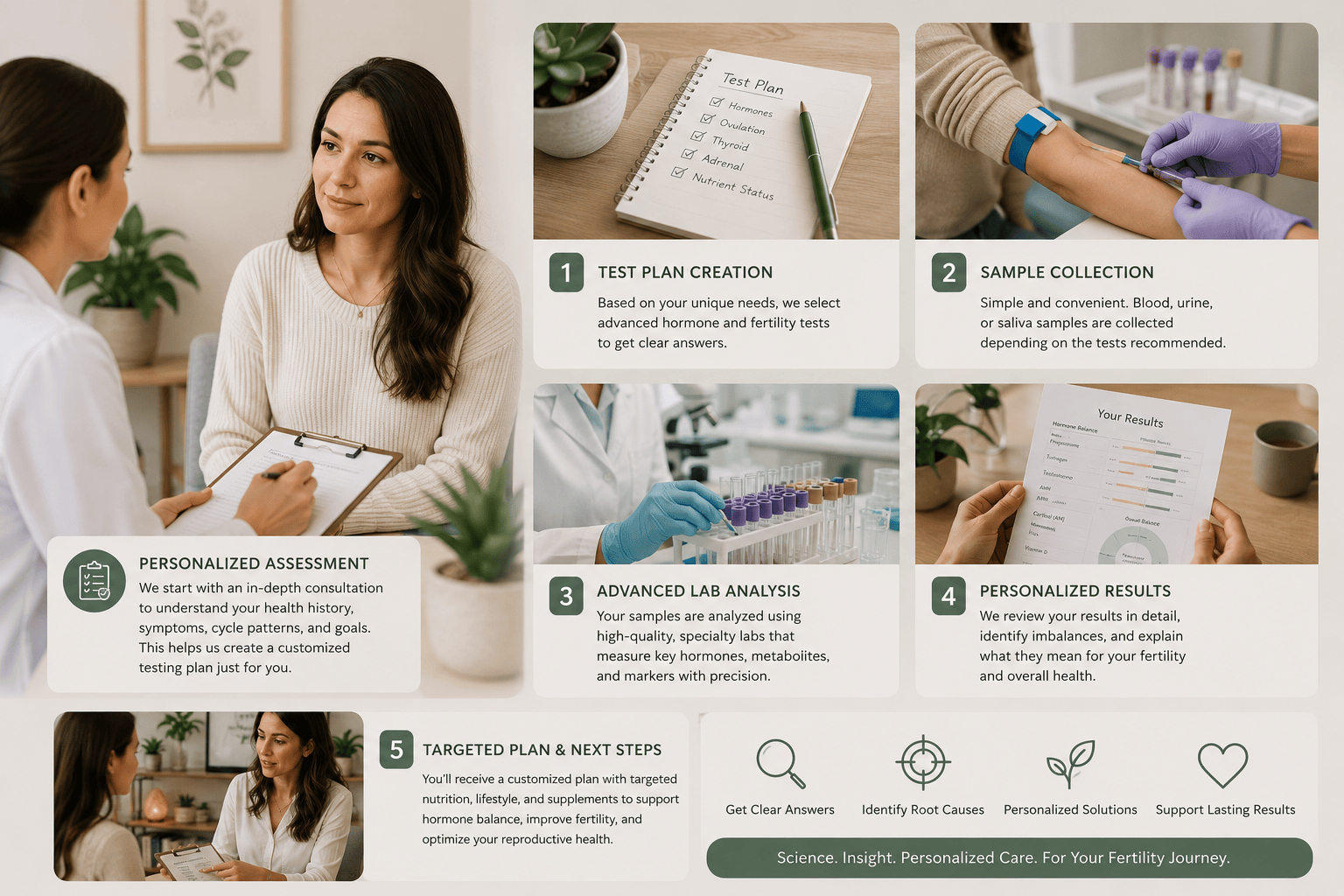
Step 1: Initial Consultation
The process begins with an in-depth conversation about symptoms, health history, menstrual cycles, stress levels, lifestyle habits, and previous fertility experiences.
Step 2: Comprehensive Health Review
Rather than looking at fertility alone, providers evaluate how multiple body systems interact together.
Step 3: Advanced Testing and Analysis
Testing may help uncover hidden contributors affecting hormone and reproductive function.
Step 4: Lifestyle and Nutrition Assessment
Daily habits, stress patterns, sleep quality, movement, and nutrition are all evaluated carefully.
Step 5: Personalized Treatment Strategy
Care plans may include:
- Hormonal support
- Functional nutrition
- Wellness optimization
- IV therapy for nutrient replenishment
- Weight management support
- Stress reduction strategies
- Gut health support
No two fertility journeys are identical, which is why personalized care matters.
Step 6: Ongoing Monitoring and Optimization
Hormonal and metabolic health can shift over time. Ongoing monitoring helps adjust care strategies as the body responds.
The Connection Between Weight, Metabolism, and Fertility
Many women are surprised to learn how closely fertility connects to metabolic health.
Even mild insulin resistance may influence:
- Ovulation
- Hormone balance
- Inflammation
- Egg quality
This is one reason weight loss management and diabetes management services are often relevant within functional fertility care.
The goal is not extreme dieting or rapid weight loss.
Instead, the focus is improving metabolic function in a sustainable, supportive way.
When Should You Seek Help for Fertility Concerns?
Women under 35 should generally consider evaluation after trying to conceive for 12 months without success.
However, earlier evaluation may be helpful if symptoms include:
- Irregular cycles
- Severe PMS
- Endometriosis symptoms
- Recurrent miscarriages
- PCOS
- Thyroid concerns
- Chronic fatigue
- Significant stress
- Hormonal symptoms
Seeking answers early may help prevent years of frustration and uncertainty.
Why Personalized Fertility Care Matters
Many women feel dismissed when they are told everything looks “fine” despite ongoing symptoms and fertility struggles.
But fertility is rarely about one single factor.
The body functions as an interconnected system. Hormones, inflammation, stress response, metabolism, sleep, digestion, and nutrient status all influence reproductive health.
That’s why many women in McKinney, Frisco, Plano, and surrounding Texas communities are turning toward more comprehensive, personalized approaches that focus on whole-body wellness rather than symptom management alone.
A Compassionate Path Forward
Fertility struggles can affect emotional health, relationships, confidence, and overall well-being. Many women quietly carry feelings of guilt, shame, frustration, or fear during this process.
Supportive, root-cause-focused care can help women better understand their bodies and feel more empowered throughout their fertility journey.
At Forum Functional Health, the goal is not simply chasing symptoms. It’s about helping patients uncover deeper imbalances, improve long-term wellness, and create personalized strategies that support overall reproductive health naturally and responsibly.
If you’ve been struggling with unexplained fertility concerns, persistent hormonal symptoms, or ongoing frustration despite “normal” answers, seeking a more comprehensive evaluation may help provide the clarity and direction you’ve been looking for.
FAQs
Why is infertility becoming more common in younger women?
Infertility in younger women may be linked to hormonal imbalances, chronic stress, poor sleep, inflammation, environmental toxin exposure, blood sugar issues, and lifestyle factors that affect reproductive health.
Can stress really affect fertility?
Yes. Chronic stress can influence cortisol levels, hormone balance, ovulation, sleep quality, and menstrual cycles, all of which may impact fertility over time.
What are endocrine disruptors and how do they affect fertility?
Endocrine disruptors are chemicals found in certain plastics, pesticides, cosmetics, and household products that may interfere with hormone signaling and reproductive function.
Can functional medicine help unexplained infertility?
Functional medicine may help identify underlying contributors such as hormone imbalances, inflammation, nutrient deficiencies, thyroid dysfunction, gut health issues, or metabolic concerns that could affect fertility.
What testing may be recommended for fertility concerns?
Testing may include hormone panels, thyroid testing, cortisol analysis, metabolic markers, nutrient evaluations, gut health assessments, and ancillary testing tailored to the patient’s symptoms and history.
When should I see a fertility specialist or functional medicine provider?
Women under 35 should generally seek evaluation after 12 months of trying to conceive. Earlier support may be helpful for irregular cycles, hormonal symptoms, recurrent miscarriages, PCOS, thyroid issues, or chronic fatigue.
Contact Forum Functional Health